There’s a moment every serious casino player knows — sitting across from a dealer, two hole cards face down, the board not yet revealed, and that particular kind of pressure building that you simply can’t replicate in any slot machine. That second between the deal and your first decision, where everything is still possible, is the thing that keeps table game players coming back. Ultimate Texas Hold’em has always delivered that moment better than most. It’s not roulette, where you’re just watching a ball drop. It’s not baccarat, where you have no choices to make at all. It requires you to think, however briefly, about whether your hand is worth fighting for.
The question worth asking in early 2026 is whether TaDa Gaming’s take on this legendary format brings something genuinely worth your time and money, or whether it’s just another competent rehash dressed up in decent graphics and placed in front of players who might not know the difference. There are plenty of those in the market. A lot of providers have taken the path of least resistance — copy the rules, render some cards, add a felt texture, and call it done.
After spending considerable time with this title — and having watched TaDa Gaming’s rapid climb through the iGaming ranks over the past few years — I can give you a reasonably honest assessment. Spoiler: it’s better than the skeptics would have you believe, though not without its quirks.
Who Is TaDa Gaming, and Why Should You Care?
Before getting into the weeds on this specific title, some context matters. TaDa Gaming isn’t some fly-by-night operation that appeared yesterday. The company is backed by International Game System Co. Ltd., a company with roots going back to 1989, and operates out of Malta. They secured their Malta Gaming Authority (MGA) licence in 2023 and followed that up with the Swedish Spelinspektionen permit in 2024. By 2025 they had also earned approval from the UK Gambling Commission — not a rubber stamp anyone hands out lightly — plus certifications for Italy, Spain, Romania, Portugal, and Belgium.
Their content now sits inside over 1,700 casinos worldwide. GGR grew 217% through 2025, which by any measure is a serious number, not a marketing figure someone invented. The portfolio crossed 220+ titles by late 2025, built at a pace of at least four new releases per month.
Most of TaDa’s reputation was built on their fishing-shooting arcade games — Mega Fishing, Jackpot Fishing, and their various sequels carved out an audience that crosses from traditional slots players to people coming in from mobile gaming and console backgrounds. Their TriLuck™ series added another dimension. They’ve also been active in table games, and Ultimate Texas Hold’em, released in August 2024, sits in that segment of the portfolio.
The point is: you’re not dealing with a provider that threw together a poker game because someone in a board meeting said “poker is popular.” TaDa built this on solid regulatory footing, tested it through proper independent certification via GLI and BMM Test Labs, and released it into a market they’re actively growing.
The Game Itself: What Exactly Are You Playing?
Ultimate Texas Hold’em as a game format didn’t originate with TaDa. Roger Snow invented the concept, Shuffle Master (now part of Bally Gaming) brought it to casino floors in the early 2000s, and Evolution Gaming put a live dealer version online that’s been running since 2017. The format is well-established and well-understood.
What TaDa has done is produce a digital, RNG-powered card game version — not a live dealer product — that faithfully adapts the structure of the original game while adding their own visual presentation and, crucially, a multiplier mechanic that gives their version a slightly different character.
The core loop is exactly what any Ultimate Texas Hold’em player will recognize. You start by placing equal Ante and Blind bets. There’s an optional side bet. Cards are dealt — you get two hole cards, the dealer gets two face-down hole cards, and five community cards go out in stages. Your strategic decisions happen in three windows: before the flop (where you can raise 3x or 4x your ante), after the flop (where a 2x raise is available), and at the river (where you can raise 1x or simply fold). Once you’ve committed to a play, you cannot re-enter — fold and you walk away from whatever you’ve staked minus the potential Trips side bet payout.
The dealer needs at least a pair to qualify. If they don’t qualify, your Play bet wins automatically but your Ante is pushed back. If the dealer qualifies and you beat them, both Ante and Play pay at 1:1. The Blind bet is where the interesting money lives — it pays out on a tiered paytable based on the strength of your winning hand.
Paytable and RTP: What the Numbers Look Like
TaDa’s version lists an RTP of 96.5% as cited across aggregator sources, though at least one certified review source puts the figure closer to 97%. This discrepancy across sources is worth acknowledging transparently rather than picking one and presenting it as gospel — operators can configure RTP ranges, and what you’re looking at may depend on the specific casino where you’re playing.
To put these numbers into perspective: the Blind bet side of the table game format, when played with optimal strategy, is among the friendliest bets in casino gaming. Analysis of the standard game format shows the house edge sitting around 2.8% with basic strategy, and the RTP when playing optimally can approach 99.47% on the total combined bet. TaDa’s RNG version, sitting in that 96.5%–97% range, is respectable for a digital card game and broadly in line with the industry standard for this type of product.
The max win comes in at 262x the bet. That figure connects directly to hitting a Royal Flush through the Blind paytable — the standard blind paytable in this game format pays as follows for winning hands:
- Royal Flush: 500:1
- Straight Flush: 50:1
- Four of a Kind: 10:1
- Full House: 3:1
- Flush: 3:2
- Straight: 1:1
- All other winning hands: Push (bets returned)
For anything below a Straight, your Blind bet is simply returned — you don’t win anything extra from it, but you don’t lose it either if you’ve won the hand. The dealer not qualifying changes the dynamics further: in that scenario, the Play bet wins, but the Ante pushes.
The Trips side bet — optional and paid out on your final five-card hand regardless of whether you beat the dealer — typically starts at 3:1 for three of a kind and climbs toward 50:1 for a Royal Flush, though the exact Trips paytable can vary by operator. The RTP on this side bet across most configurations sits at 96.5%.
Betting limits in TaDa’s version run from 0.1 to 100, which puts it within reach of casual players without excluding those who want to put some real weight on the table.
Strategy: The Skill Element That Separates This From a Slot
Here’s where Ultimate Texas Hold’em earns its differentiation from passive casino games, and it’s worth spending some time on this because a lot of players underestimate how much their decisions actually matter. This is not a game where you just tap a button and hope. The structure gives you three distinct moments to commit more money — and whether you use those moments correctly has a direct, mathematically meaningful impact on your expected return.
The preflop betting round is the most impactful. Your 4x raise here carries the highest strategic weight, and the general guidance from analysts who’ve run the math is clear: raise 4x before the flop with any pocket pair (threes or above — pairs of twos are marginal), any ace, and strong king-high hands like K-5 offsuit or better, Q-8 or better, or J-10. The suited equivalent of a king-high hand is also a raise at this stage. Checking weaker hands to see the flop costs you nothing extra but gives you more information.
Here’s something a lot of casual players get wrong: when you do raise, always raise the full 4x rather than 3x. There is almost no scenario where a 3x raise preflop is strategically superior to either a 4x raise or a check. The 3x option exists in the rules, but it’s a trap for players who want to hedge — and hedging in this game costs you over time.
Post-flop, the 2x raise applies when you’ve made two pair or better, or when the board gives you four cards to a flush or an open-ended straight draw. The river decision is more mechanical: raise 1x with any pair or better, and fold only your absolute weakest high-card hands where you have no realistic chance of beating anything the dealer holds. At the river, the 1x call costs you relatively little compared to the potential return on made hands, so this is generally where players should be least afraid to commit.
The reason this matters: players who deviate consistently from this structure don’t just play suboptimally — they significantly increase the house edge against themselves. The theoretical RTP figures assume reasonably competent play. Walk in treating this like a coin flip and the math moves against you fast. The difference between an informed player and a completely passive one at this table is not academic — it’s real money over real sessions.
For newcomers to the format, TaDa’s version reportedly includes tutorial guidance within the game itself, which is genuinely useful. Learning the betting windows on paper before risking real chips at the table is time well spent. The free demo mode, widely available across platforms that host TaDa content, gives you an opportunity to drill the preflop decision tree without any financial consequence.
Visual Presentation and Technical Performance
TaDa Gaming builds everything in HTML5 — every single title in their portfolio, including this one. That means mobile compatibility isn’t a feature someone bolted on after the fact; it’s built into the foundation. The game runs on both desktop and mobile without separate apps or downloads required. On Android and iOS devices, the interface holds up cleanly across different screen sizes.
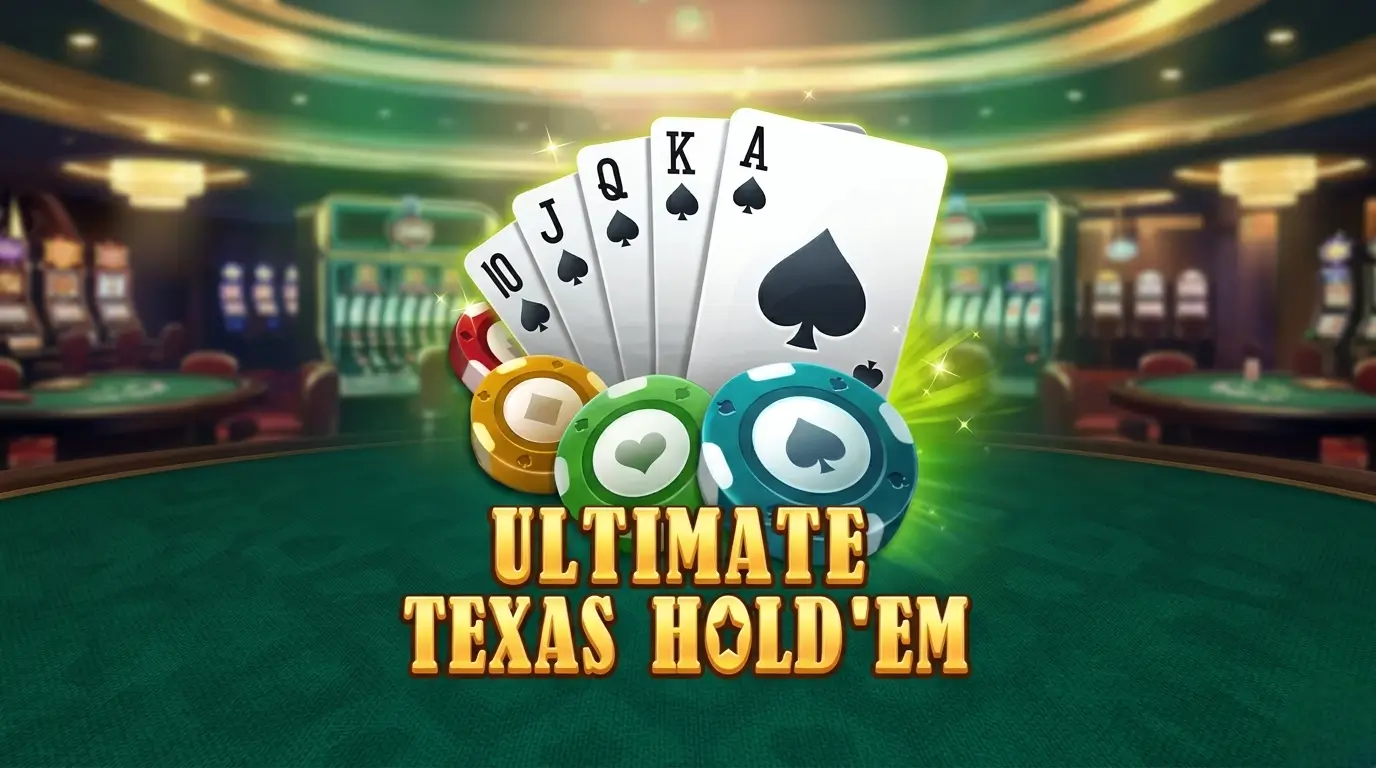
The visual design follows a conventional upscale casino aesthetic — green felt, elegant card animations, a presentation that doesn’t try to reinvent what a poker table looks like but does it with clean execution and smooth motion. The graphical quality is above average for the format without being showy about it. TaDa’s aesthetic sensibility across their portfolio leans toward polish rather than spectacle, and this game fits that pattern.
There are multiple supported languages, which reflects TaDa’s broader emphasis on localization as a strategic priority. Their CEO Andy Huang has been vocal about “glocalisation” — adapting products for specific markets rather than dropping a one-size-fits-all game into every jurisdiction. The table game follows that approach at the language level.
Card animations are responsive and clear. Deal speeds feel appropriate. Nothing about the interface is cluttered or confusing once you understand the betting structure. For returning players who’ve played other versions of this game format, the transition is frictionless.
The Multiplier Feature: TaDa’s Specific Twist
The official TaDa Gaming game sheet lists “Multiplier” and “Royal Flush” as the two special features for this title. The Royal Flush element connects to the headline promotion from the developer’s own copy — land one and you’re looking at a 500x prize on the Blind bet. In a real-money session at the maximum bet level, that’s a number worth thinking about.
The multiplier mechanic adds a layer that distinguishes TaDa’s digital version from a straight conversion of the standard table game rules. The specific implementation of the multiplier within the game’s round structure adds variance potential beyond what you’d see in a flat-payout card game. This is consistent with TaDa’s broader design philosophy across their catalog — they rarely publish a title without some kind of accumulating multiplier or multiplier-driven feature to create meaningful swing moments.
How often you’ll see the multiplier trigger in any given session depends on variance, and this game — like all legitimate casino products from certified providers — runs on a certified random number generator verified by external testing labs. TaDa specifically flags that they put millions of rounds through GLI and BMM Test Labs to validate hit rates and RTP accuracy before any title reaches the market. Players can also verify server seeds through their gaming history to confirm round integrity, which is a practical transparency measure.
Availability and Where You’ll Find It
As of early 2026, Ultimate Texas Hold’em by TaDa Gaming is live across a confirmed 53 countries according to aggregator data. In specific tracked markets, the game shows up in a significant portion of casinos that carry TaDa’s broader catalog. You’ll find it at operators on platforms like Dreamz Casino and various others that have integrated TaDa’s API.
The game is classified as a Table and Card title by TaDa’s own categorization, and it sits alongside their broader table game offering which includes crash games, bingo, and other card products. It was published in August 2024, making it a relatively recent addition but one that’s had time to settle into distribution.
Demo play is widely available — multiple platforms host the free-play version, which makes sense for a game where understanding the strategic betting windows genuinely affects your outcomes. I’d recommend spending time in demo mode not just to get familiar with the interface, but specifically to practice the preflop decision points until they feel automatic.
How It Compares to Other Versions of This Game
This is a fair question, and it’s the one players who’ve spent time at poker-format casino tables are going to ask immediately. Evolution Gaming’s live dealer version of Ultimate Texas Hold’em has been the market reference point since 2017 — it runs at 97.82% RTP on the initial bet and 99.47% on the total bet when played optimally, with betting ranges up to €500 at some operators. Shuffle Master’s original digital version established the standard paytable mechanics that TaDa’s game follows. And there are RNG versions from other providers scattered across the market as well.
Comparing TaDa’s RNG version directly to Evolution’s live product is a bit like comparing a high-quality digital chess game to playing across the table from a human opponent — the rules are the same, the strategy is the same, but the experience has a different quality. Evolution’s live tables have real dealers, real social interaction, and the particular tension that comes from watching a human shuffle and deal. A dealer who makes eye contact and asks how you want to play is a fundamentally different experience from clicking a “Raise” button. That distinction matters to a certain type of player, and there’s no point pretending otherwise.
But Evolution’s live tables are not always available. They have limited seating. They require betting minimums that aren’t accessible to everyone. And they’re not present in every market or at every operator.
TaDa’s version is faster, more accessible on mobile, playable at lower stakes (0.1 minimum bet versus typical live table minimums), and available in significantly more markets due to their expanding regulatory footprint across 53 countries. The pace also suits players who want to run more hands per hour without waiting for live dealer actions between rounds. If you’re a volume player who wants to grind the strategy properly over many hands, the RNG format actually works in your favor.
Where TaDa’s version has genuine competitive standing beyond pure accessibility: the multiplier feature adds a ceiling on individual hand outcomes that standard-rules RNG versions don’t offer. That 262x max win — tied to the Royal Flush Blind combination — gives players something to aim at in a format where the standard experience is more about grinding correct decisions than landing massive single-hand payouts.
The RTP comparison, where sources put TaDa’s figure at 96.5%–97% versus the standard table game’s 97.82% optimal RTP, does show a gap of less than a percentage point. Players should be aware of that difference. In practice, this gap means little to recreational players and something meaningful to advantage-focused players who track every fraction of expected value. Whether it matters to you depends on your approach to the game.
Responsible Gambling Note
Ultimate Texas Hold’em is a game with a genuine strategy component, and that can create the illusion of more control than actually exists. Learning the correct betting decisions is valuable — it genuinely reduces the house edge and improves your expected outcome. But “improving your expected outcome” still means losing less slowly over a long session, not winning more often than you lose. The house still holds an edge in every scenario, under every strategy, on every correctly certified platform.
There’s a specific trap this game sets for poker players in particular. If you’re someone who wins at real Texas Hold’em — where you’re competing against other players and skill genuinely determines long-term outcomes — you may bring that confidence into this casino format and overestimate what your poker knowledge buys you. Your hand-reading ability, your knowledge of pot odds in a full-ring game, your understanding of player tendencies — none of that is relevant here. The only edge this game format rewards is correct application of the preflop, flop, and river decision rules. Beyond that, the outcomes are determined by the RNG.
Chasing losses by adjusting your bet sizing mid-session — going bigger when you’re down — is how sessions spiral. Set a limit before you sit down, stick to it, and treat the strategic element as a way to minimize the house edge rather than eliminate it.
If you’re playing for real money, use whatever deposit limits and responsible gambling tools your casino provides. Every legitimate operator carrying TaDa Gaming content operates under regulatory requirements that mandate these tools be available. The game is also available for free play on multiple platforms if you want to work on your strategy without the risk — and for this particular game, I’d genuinely recommend using that option until the betting decisions feel automatic rather than deliberate.
Final Verdict
TaDa Gaming’s Ultimate Texas Hold’em is a well-constructed, properly certified digital version of one of the more intellectually engaging formats in the casino table game space. It doesn’t try to be Evolution’s live dealer product, and it doesn’t need to be. It delivers the core game loop cleanly, adds a multiplier feature that creates some memorable swing moments, runs on any device without friction, and sits inside a regulatory framework that’s legitimately broad — MGA, UKGC, Spelinspektionen, GLI and BMM Test Labs certification, and active availability across 53 countries as of early 2026.
The RTP sits in a respectable 96.5%–97% range depending on the operator and configuration. That’s worth flagging as a real difference from the optimal-play RTP achievable in the traditional table game format, but it’s not a disqualifying gap — it’s within the normal range for RNG card games and better than a significant portion of the digital table game market. The max win of 262x (tied to the Royal Flush Blind payout) gives players something meaningful to aim for without inflating expectations beyond what the math supports. The betting range from 0.1 to 100 keeps it accessible to a wide audience without excluding players who want to put some meaningful weight on the table.
For poker players specifically, this is a format you’ll adapt to quickly — the hand rankings are identical to Texas Hold’em, the strategic thinking about hand strength carries over, and the structured betting rounds add a casino-specific decision layer that’s learnable in a session or two. For players new to card games but tired of passive slots, this is one of the better entry points into strategy-adjacent casino gaming that TaDa or any other provider currently offers.
For operators and players in markets where live dealer product access is limited, TaDa’s version fills a meaningful gap. It’s certified, it’s mobile-ready, it’s backed by a provider that’s been expanding steadily and responsibly across regulated markets, and it gives players a real game to think about rather than just watch.
Is it the most spectacular product in TaDa’s 220+ title catalog? Honestly, no — that distinction sits comfortably with their fishing-shooting titles and the TriLuck series that’s been driving their growth across Europe and Latin America. But as a table game offering, it’s legitimate, properly executed, and worth your attention if card-based casino gaming is something you take seriously.
The verdict is simple: play the demo, learn the preflop decision chart, and approach the real-money version with clear limits and correct strategy. If you do those three things, TaDa’s Ultimate Texas Hold’em will give you a solid, fair, and genuinely engaging casino experience.