The crash game market is crowded. Aviator sits at the top, Spaceman has its loyal following, and a dozen smaller titles fight for the scraps. Mriya by NetGame Entertainment doesn’t pretend to challenge Aviator’s distribution or Spaceman’s max win ceiling. What it does instead is build a game around a subject that most crash titles ignore entirely: a real aircraft with a real history, and one that ended in a way that left people watching the news in disbelief.
Whether that context adds something meaningful to your session or just reads as a footnote in a review depends on who you are. But it’s worth understanding before you sit down at the game, because the Antonov An-225 is not just branding — it shaped everything from the visual style to the way the round plays out on screen.
This review covers how Mriya works, what the numbers actually mean, where the game falls short compared to its competition, and who is likely to find value in it heading into 2026.
About the Developer
NetGame Entertainment was founded in 2012 and has released approximately 30 titles across crash games and other formats. The studio is smaller than the major crash game developers — it doesn’t have Spribe’s distribution network or SmartSoft’s catalogue depth — but it has maintained a presence in the industry for over a decade, exhibiting at events like SiGMA and ICE Africa.
The company holds a Curaçao licence and has Gaming Labs certification. These are functional credentials within the regulated online gambling space, though they don’t provide players with direct verification tools for individual round outcomes. More on that under the provably fair section.
Mriya and Russian Warship are the studio’s two crash game releases as of early 2026. The catalogue is narrow by the standards of a category that’s seen significant output since 2020, but both titles are built around specific themes rather than generic visual templates, which distinguishes them from the bulk of smaller crash game production.
The Aircraft Behind the Game
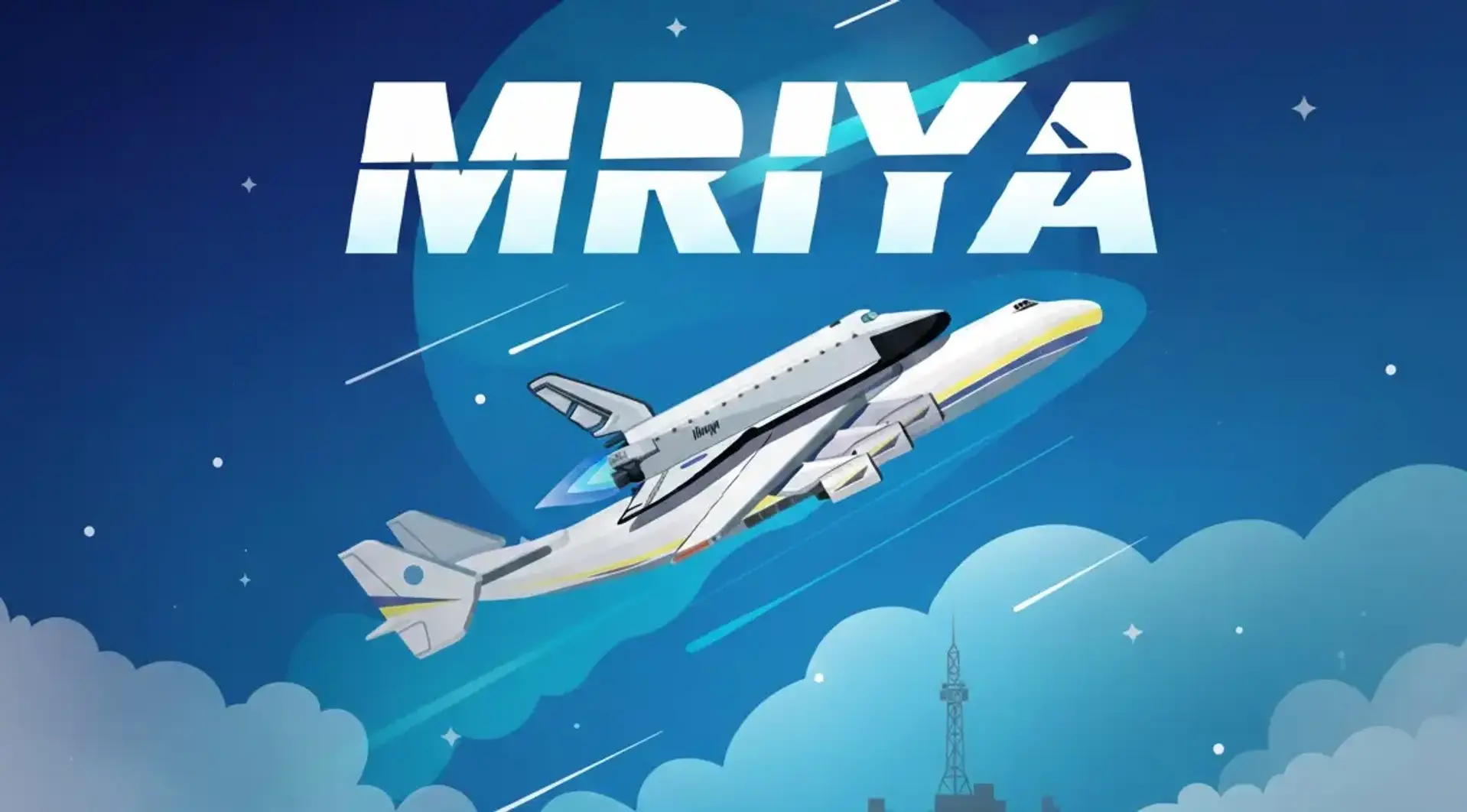
The Antonov An-225 Mriya was a Soviet-era cargo plane built in the 1980s with one specific purpose: to carry the Buran space shuttle on its back. It was the heaviest aircraft ever constructed, and for decades it held records that no other plane came close to matching. There was only one ever built.
On 27 February 2022, it was destroyed at Hostomel Airport near Kyiv during the Russian invasion of Ukraine. The damage was total. As of early 2026, there is no confirmed rebuilt version in operation.
NetGame released Mriya in April 2022 — weeks after the aircraft’s destruction. Whether that timing was planned as a tribute or was coincidental is not publicly documented. Either way, the game carries the name and uses the aircraft as its central visual, and several reviews have treated that as a meaningful creative choice. That reads as fair.
The game is not a documentary, and it doesn’t need to be. But the context gives the theme more weight than the typical rocket-on-a-screen crash game, and it’s worth having before you open the lobby.
How the Game Works
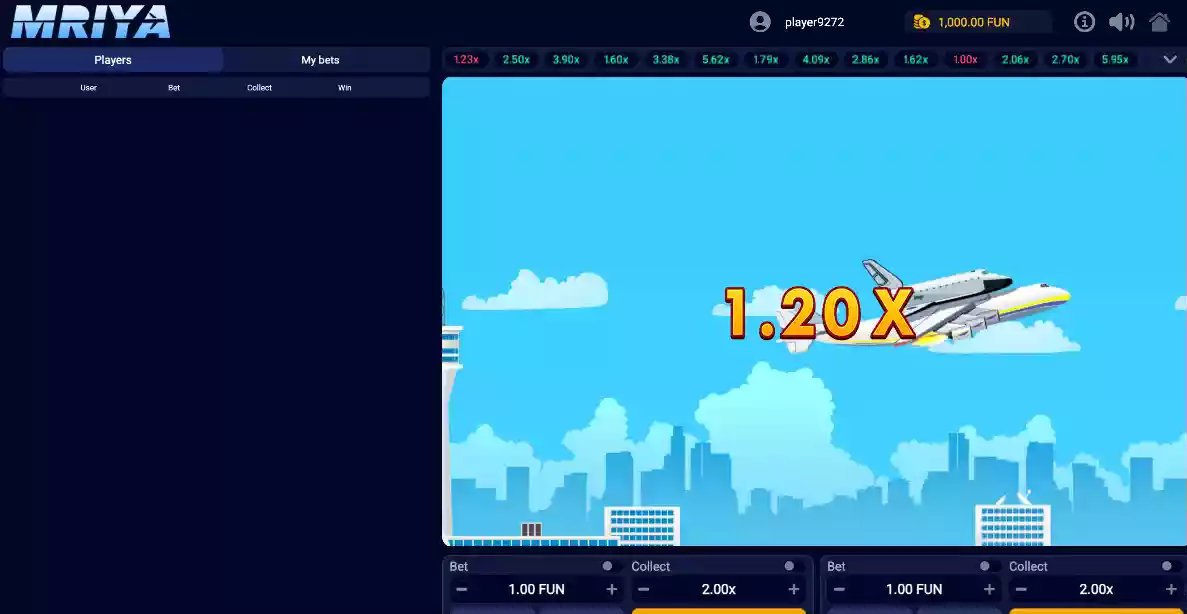
Mriya follows the standard crash game format. A multiplier starts at 1x and climbs. Your job is to cash out before it crashes to zero. Cash out in time and you win your bet multiplied by whatever figure you collected at. Miss the window and you lose your stake.
That’s the genre. Mriya’s version of it plays out like this:
The betting phase. Before each round starts, you have roughly ten seconds to place your bet. During this window, the screen shows yellow cargo vehicles loading onto the runway — a visual detail specific to Mriya that doubles as a timer. This is not a bonus feature; the cars are just animation. Once the countdown closes, betting locks and the round begins.
Takeoff and multiplier climb. The Antonov An-225 lifts off from the runway, carrying a spaceplane on its fuselage. The multiplier starts rising from 1x. The rate of climb isn’t linear — some rounds move fast, some hover at low multipliers for longer before either crashing or pushing higher.
The shuttle undock at approximately 3x. This is the point that confuses first-time players most. When the multiplier reaches around 3x, the spaceplane separates from the carrier aircraft and continues climbing on its own while the An-225 disappears from the screen. Some players interpret this as a bonus trigger or a change in the game’s mechanics. It isn’t. The undock is a visual-only event. The multiplier continues its climb exactly as it would have otherwise. Nothing changes in terms of probability or potential outcome. The spaceplane takes over visually, but the math underneath is running the same way it was from the start.
The crash. At some point determined by the game’s RNG, the multiplier stops and the round ends. If you’ve already hit Collect, you win. If not, your bet is gone.
The collect window. You can click the Collect button at any point during the round to lock in your winnings at whatever the current multiplier shows. This is the only decision you make after placing your bet. Most experienced crash players set an auto-collect target before the round begins rather than attempting to click manually, for reasons covered in the features section below.
Key Features
Dual Bets
Mriya allows two separate bets per round. Each bet panel operates independently — you can set different amounts, different auto-collect targets, and collect them at different moments. The maximum per panel is $300, which puts the total round exposure at $600.
The practical use of dual bets depends on your approach. One common pattern: set a conservative auto-collect on the first panel (say 1.5x or 2x) to recover most of your stake regardless of what happens, then let the second panel run manually or with a higher auto-collect target to chase a larger return. This creates a hedge — you’re not doubling your upside, but you’re reducing the frequency of total-loss rounds.
The alternative is to use both panels at the same target, which effectively doubles your exposure without changing the risk profile per panel. That’s a different kind of decision and comes down to bankroll size and personal preference.
Neither approach changes the underlying math. The RNG doesn’t care how many panels you’ve opened.
Autobet
The autobet feature lets you pre-set bets for consecutive rounds without manually placing each one. You activate it by toggling the Bet slider to green. This is useful for players who want to run a session without constant interaction, or who are testing a specific auto-collect level over many rounds.
The limitation here is real and worth understanding before you rely on it. Mriya’s autobet only lets you specify the number of rounds. There is no loss-limit trigger — meaning you cannot tell the game to stop autobetting if your balance drops by a specific amount or if you’ve lost a consecutive number of rounds. You set a round count and it runs until that count is exhausted or you stop it manually.
Aviator and several other crash games have more flexible automation controls. If session management is important to how you play, this is a meaningful gap.
Auto-Collect
Auto-collect lets you pre-set a multiplier target. When the round reaches that number, your bet cashes out automatically. You don’t need to watch the screen or time a click.
The benefit is that it removes the in-the-moment decision entirely. When you’re watching a multiplier climb, there’s a tendency to hold on a round too long. Auto-collect enforces a pre-decided rule rather than a reactive one. For players who find themselves overriding their own instincts during sessions, that discipline has practical value.
The constraint is the same as autobet: there’s no conditional logic. You can’t set “auto-collect at 2x, but only if my session profit is positive” or “stop if I’ve lost three consecutive rounds.” It’s a fixed target with no conditions attached.
Stats Panels
The left side of the screen during a round shows two data columns.
The All Bets panel displays current-round activity from all active players: bet sizes, the multipliers they collected at, and their winnings. This gives a live picture of what stakes are on the table in a given round and what other players chose to cash out at.
The My Bets panel tracks your own session history. Each row shows five values: Time, Crash (the point at which that round ended), Bet (what you staked), Collect (what you cashed out at, or zero if you didn’t), and Win (your return). The History panel also shows a running record of recent round crash points — how far the multiplier reached before the round ended. At the time of writing, this shows the last 44 rounds.
Reading through recent crash points before a session tells you what the distribution has looked like recently, though it says nothing reliable about what the next round will do. The game’s RNG produces each outcome independently.
One pattern some players use: scan the last 20–30 crash points in the History panel before setting an auto-collect target. If the recent distribution shows many rounds ending below 2x, a player with a conservative approach might drop their target to 1.5x. This isn’t a strategy that changes expected value — it doesn’t — but it’s a way to align your session targets with observable recent behaviour. Whether that has any psychological value is a separate question.
Practical Session Management
Understanding the features on paper is different from knowing how a session actually feels at a $10–$20 stake level. A few practical observations worth raising before the math section:
Rounds in Mriya are short. From the start of the betting phase to a crash at low multipliers, you can be into a new round within 20 seconds. This pace compounds losses faster than most slot sessions if you’re placing manual bets without a target ceiling. The autobet feature removes the activation step, which can accelerate the pace further.
Setting an auto-collect before each round is the single most useful habit in crash games generally, and Mriya is no exception. Decide your target before the round starts, not while the multiplier is climbing. The temptation to override an auto-collect target when a round is going well is real and it’s what the game is designed around — your emotional response to a rising number. The auto-collect function exists to neutralise that response, and it works if you let it.
The dual-bet feature is worth using if you’re the kind of player who wants to hedge rather than go all-in on a single outcome per round. A practical setup: Panel 1 at 1.5x auto-collect for recovery, Panel 2 at a higher target (5x, 10x, whatever your risk appetite supports) with a smaller stake. Over a session, Panel 1 returns regularly while Panel 2 produces occasional larger wins offset by total losses. The net result depends on your targets, your stakes, and the session’s actual distribution — not on the hedging structure itself. The structure manages how losses feel, not how often they happen.
Bankroll management in a medium-volatility crash game like Mriya is more forgiving than in high-volatility titles, but it’s not relaxed. A bad sequence of sub-2x crashes can eliminate a small bankroll quickly if bets are sized without a buffer. A reasonable rule: size each round’s total stake at no more than 2–3% of your session bankroll, which gives you 30–50 rounds of runway before a total loss scenario.
Math Model: What the Numbers Mean
RTP: 96.10%
This is the confirmed, official return-to-player figure from NetGame. Over a very large number of rounds, the game returns $96.10 for every $100 wagered. That’s a theoretical long-run figure — short sessions can land significantly above or below it.
How does 96.10% sit in the crash game market as of 2026? Below average. Aviator runs at 97%. Spaceman is at 97%. Some operators configure Aero above 98%. Mriya’s figure is competitive with older or lower-tier titles but isn’t at the top of the category.
The practical difference between 96.10% and 97% is small in a single session. Over thousands of rounds at meaningful stakes, it compounds.
Volatility: Medium
Medium volatility in a crash game means the multiplier distribution produces relatively frequent low-to-mid wins rather than the feast-or-famine profile of a high-volatility title. You’ll see more rounds complete in the 1.5x–4x range and fewer very high multipliers than you would in a high-volatility crash game.
This doesn’t mean high multipliers don’t occur — they do. The maximum is 1,000x. But medium volatility means they occur less often than in a game like JetX3 or other titles built specifically around chasing large numbers.
What this means in practice: a player running auto-collect at 2x will win fairly often. A player waiting for 50x or above will go through long stretches without a hit. The medium volatility label is accurate, and it aligns with the experience most reviewers describe.
Max Win: 1,000x
At $300 maximum bet, the theoretical maximum win per round is $300,000. That figure requires hitting 1,000x, which is mathematically possible but statistically rare.
The 1,000x cap is the weakest point in Mriya’s math model relative to competitors. Spaceman goes to 5,000x. Aero has a reported ceiling of 999,999x. For players chasing large multipliers, Mriya’s ceiling is a genuine limitation. The game is not designed for that use case, and the medium volatility profile confirms it.
Bet Range: $1–$300 per panel
Two panels at $300 gives a maximum round exposure of $600. The $1 minimum is accessible for lower-stakes play, though it’s higher than some titles that start at $0.10 or accept cryptocurrency in smaller denominations.
Visuals and Audio
Mriya uses a pixel-art or hand-drawn visual style rather than the 3D rendering common in newer crash titles. The Antonov An-225 is drawn with reasonable detail — recognisable to anyone familiar with the aircraft, with the correct configuration of six engines and the twin tail. The sky backdrop shifts dynamically during ascent, moving from a runway environment through cloud layers and into a high-altitude setting as the round progresses.
The shuttle release animation at approximately 3x is the most visually distinct moment in a round. The carrier aircraft angles away and disappears while the spaceplane continues upward. It’s clean, and it works as a visual beat that breaks up the monotony of watching a number climb.
Audio is functional rather than notable. Engine sounds play during ascent, and there’s a distinct audio cue at cash-out. Nothing in the sound design is distracting, but it’s also not a reason someone would choose the game.
The overall visual presentation sits above the genre average for a game released in 2022. It hasn’t dated badly, largely because the pixel-art style doesn’t age the same way photorealistic 3D does.
Where Mriya Falls Short
No Provably Fair Technology
This is the most significant concern and the one most players don’t ask about until they’ve had a bad run.
Provably fair is a cryptographic system that lets players independently verify that each round’s outcome was determined before bets were placed and wasn’t influenced by operator intervention. Aviator uses it. Several other major crash titles use it. Mriya does not.
NetGame holds a Curaçao licence and Gaming Labs certification. These are legitimate credentials that indicate regulatory oversight. But they’re not the same as provably fair, which gives players direct verification tools. With Mriya, you’re trusting that the stated 96.10% RTP is actually built into the game engine. There’s no documented player report of manipulated outcomes, and the company has operated since 2012 without significant fraud allegations. But the verification mechanism simply isn’t there.
For players who consider transparency in RNG a baseline requirement, this is a disqualifying factor.
Autobet Lacks Conditional Logic
Covered in the features section, but worth restating plainly: if you activate autobet for 50 rounds and hit a bad streak in round 10, the system will continue placing bets through rounds 11 to 50 unless you intervene manually. There’s no “stop if balance drops by X” condition.
This isn’t unique to Mriya — some other titles have the same limitation. But competitors like Aviator have implemented more flexible session controls, and the gap is noticeable once you’ve used both.
1,000x Cap
At medium volatility, the 1,000x ceiling rarely matters in practice. But it’s a hard limit, and some players specifically seek crash games because of the possibility of hitting large multipliers. If that’s your reason for playing the genre, Mriya is not the right choice.
RTP Below the Category Average
96.10% is not a bad return. It’s above many slot titles and reasonable by general casino standards. But within the crash game category specifically, the leading titles run 0.9–2.9 percentage points higher. For a player running significant volume, that gap is meaningful.
Limited Operator Distribution
As of early 2026, Mriya is available at a narrower range of operators than Aviator or Spaceman. NetGame is a smaller studio — roughly 30 titles released since 2012 — and its footprint in major markets is limited compared to Spribe or SmartSoft. Players at certain platforms may not have access to it at all.
Mobile Performance
Mriya runs in HTML5 and requires no download or dedicated app. It loads in a mobile browser and scales correctly across iOS and Android devices. The interface — two bet panels, the stats columns, and the collect button — is readable at mobile screen sizes without requiring zooming or horizontal scrolling.
The game has been confirmed as compatible with Windows, iOS, and Android. No desktop client is needed.
There’s nothing to distinguish Mriya’s mobile performance from the rest of the crash game category, most of which has moved fully to HTML5. It works as expected.
How Mriya Compares to Aviator
Aviator is the reference point for the crash game category, so any review of Mriya that doesn’t address the comparison directly is leaving out context that matters.
| Category | Mriya | Aviator |
|---|---|---|
| Developer | NetGame Entertainment | Spribe |
| RTP | 96.10% | 97% |
| Max multiplier | 1,000x | 10,000x |
| Dual bets | Yes | Yes |
| Provably fair | No | Yes |
| In-game social features | Stats panel only | Live chat + public bet feed |
| Operator availability | Limited | Widespread |
| Visual style | Pixel-art, aviation theme | Minimal, red aircraft |
The RTP gap and provably fair distinction are the two concrete differences that should inform a player’s choice. Aviator returns more per dollar wagered over the long run, and it gives players the tools to verify each round independently. Mriya does neither.
What Mriya offers instead is a more distinctive visual experience and a theme that carries actual historical weight. Whether that’s worth the trade-off in RTP and transparency is a personal call.
If you’ve never played a crash game before, Aviator is the safer starting point — it’s available at more casinos, has better player protections, and is the format most guides and strategy discussions are written around. If you’ve played Aviator and want a different visual experience with a comparable mechanic, Mriya is a reasonable alternative, provided you understand the limitations going in.
Who Should Play Mriya
Mriya is a reasonable choice if:
- You’re interested in the Antonov An-225 theme and want a game built around it
- You prefer a medium-volatility crash game that produces regular mid-range wins over one that swings between long dry spells and rare large hits
- You play at an operator that carries NetGame titles and don’t have Aviator available
- The dual-bet hedging mechanic appeals to how you prefer to manage risk
Mriya is probably not the right choice if:
- You require provably fair verification and won’t play without it
- You play crash games specifically to chase high multipliers (the 1,000x ceiling and medium volatility profile work against this)
- You want detailed session automation with conditional stop-loss rules
- You’re playing at operators in markets where NetGame has limited availability
Final Verdict
Mriya is a competently built crash game with a theme that stands apart from the category average. The Antonov An-225 tribute is handled with enough visual care that it feels like a genuine design choice rather than a skin swap. The dual-bet system works as intended, and medium volatility makes the game functional for cautious session management.
The weaknesses are real and shouldn’t be minimised. No provably fair mechanism is a concrete transparency gap at a time when the standard has been set by better-distributed titles. The 96.10% RTP is below the genre’s leading figures. The autobet controls are basic. The max win ceiling of 1,000x rules out a player profile that crash games frequently attract.
NetGame has operated for over a decade without documented integrity issues, and the licensing credentials are legitimate. But trust based on absence of complaints is a lower bar than trust based on independently verifiable results.
For the player who wants a themed crash game alternative to Aviator, is comfortable with medium volatility, and understands the limitations outlined here, Mriya delivers what it promises. For anyone with stricter requirements around fairness verification or volatility range, the category offers better-matched options.
Quick Facts
| Parameter | Value |
|---|---|
| Developer | NetGame Entertainment |
| Released | April 2022 |
| Game type | Crash / Multiplier |
| RTP | 96.10% |
| Volatility | Medium |
| Max multiplier | 1,000x |
| Bet range | $1–$300 per panel |
| Max bets per round | 2 |
| Max theoretical win | $300,000 |
| Provably fair | No |
| Platform | HTML5 |
| Devices | iOS, Android, Windows |
| License | Curaçao, Gaming Labs |