The casino floor thrums with confidence. A roulette player watches black appear six times in a row and doubles down on red, convinced it’s “due.” A blackjack player at third base hears angry mutterings from adjacent seats about how their decision “changed the shoe.” A craps player triggers the Martingale system, methodically doubling after each loss, certain the mathematics guarantee eventual victory. These scenarios repeat nightly across thousands of casinos, powered by misconceptions so pervasive that even casinos themselves profit from them. Understanding why these myths persist reveals uncomfortable truths about how our brains process randomness and probability—truths that, once accepted, can save you significant money.
Why Our Brains Love Patterns More Than Reality
Before examining specific gambling myths, we must understand why intelligent people believe them. The human brain evolved to detect patterns. This survival mechanism once saved ancestors from predators and helped them predict seasonal changes. But pattern-recognition hardware optimized for survival makes poor probability equipment in the casino.
The representativeness heuristic, identified by psychologists Amos Tversky and Daniel Kahneman, means we evaluate the probability of an event by assessing how similar it is to patterns we’ve observed before. We expect small samples to be representative of larger populations—a belief so powerful it overwhelms mathematical reality. When we see ten consecutive red spins in roulette, our brain insists that black must be “due” because a truly random sequence should be balanced.
This combines with confirmation bias. We remember the times we predicted a pattern correctly and forget the times we were wrong. A dealer’s “lucky run” is celebrated; the hundreds of ordinary shifts are forgotten. A betting system that worked for one weekend becomes evidence of a winning strategy, while years of losses from similar systems are dismissed as bad luck.
These cognitive shortcuts worked for survival but fail catastrophically at games where independence of events is absolute. Each spin is mathematically divorced from the previous one. Understanding this gap between intuition and reality is the foundation for making intelligent gambling decisions.
The Gambler’s Fallacy: When Past Results Hijack Future Probability
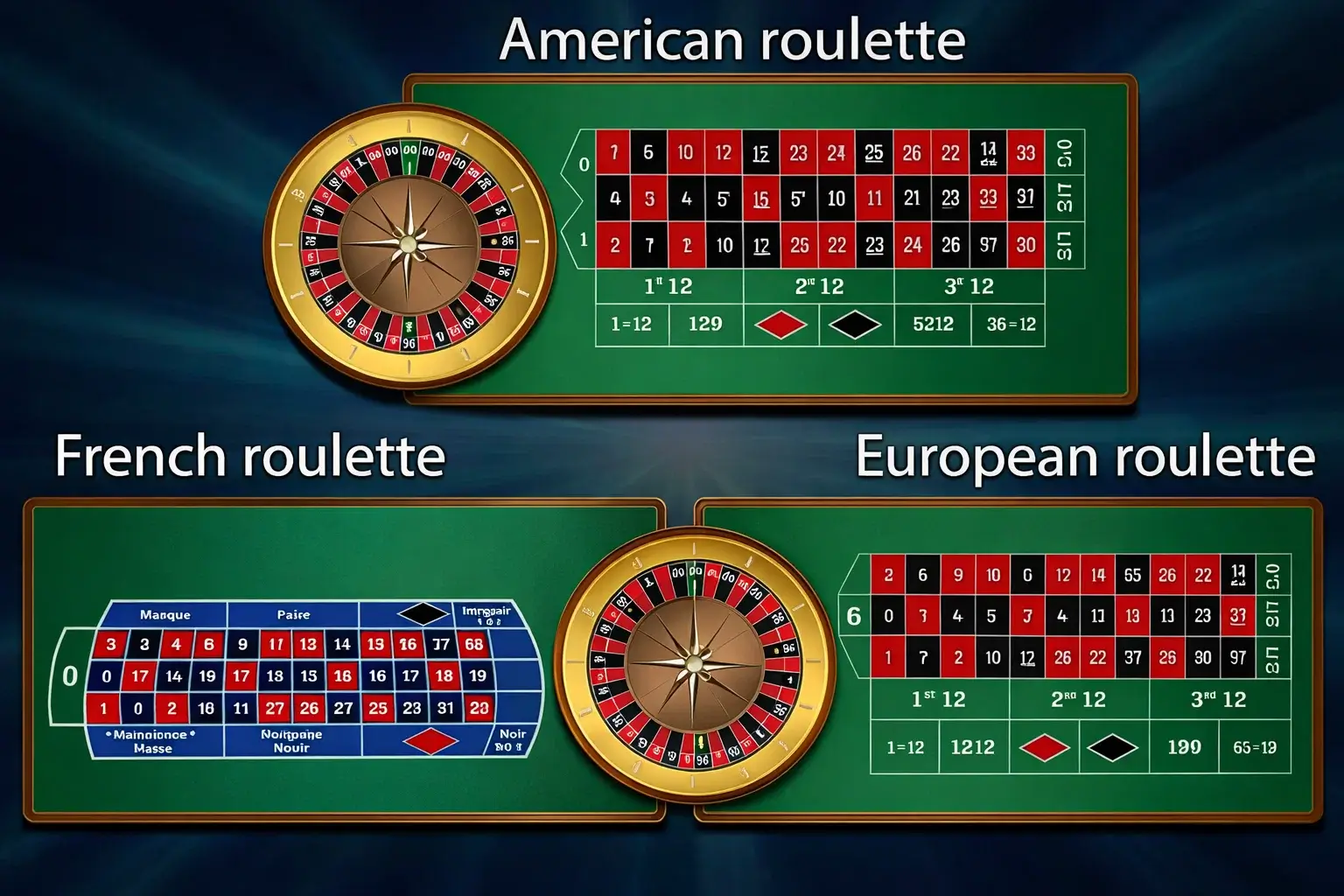
The most expensive gambling fallacy has a specific name and a historical price tag. On August 18, 1913, the roulette wheel at Monte Carlo fell on black 26 consecutive times. This event had a probability of approximately 1 in 68.4 million for any specific 26-spin sequence on a single-zero wheel. As the streak continued, panic seized the casino floor. With each black result, more gamblers rushed to bet red, convinced the law of probability demanded an imminent correction.
They were mathematically wrong.
The gambler’s fallacy is the belief that independent events are connected—that past results influence future outcomes when they demonstrably do not. At Monte Carlo in 1913, the 26th spin had precisely the same probability of falling on black as the first spin: just under 48.6% on a single-zero wheel. The previous 25 spins had zero informational content about the 26th. Gamblers lost millions because they didn’t understand this fundamental principle of independence.
Consider a simple coin flip. If a fair coin has landed heads ten times in a row, what’s the probability the next flip is tails? Still 50%. The coin has no memory. No mystical force tracks historical tallies and forces corrections. Each flip begins with a clean slate at 50/50 odds. The probability that a fair coin flipped 100 times produces roughly equal heads and tails approaches certainty only when examining all 100 flips as a complete sequence. In a subset—say, flips 40-49—we might observe seven heads and three tails. This doesn’t mean the coin is “broken.” It means small samples naturally exhibit variations from the theoretical average.
In roulette, this principle means that a number that hasn’t appeared in 100 spins has the same probability of appearing on spin 101 as it had on spin 1. Red having not appeared in 10 consecutive spins does not increase its probability on the 11th. The roulette wheel contains no mechanism for tracking what has appeared before. Each spin is independent, isolated, and uninfluenced by history.
The Monte Carlo Casino incident gave its name to this fallacy because the casino itself profited from it. Thousands of francs flowed into the casino’s reserves as increasingly desperate gamblers tried to correct what they perceived as a statistical imbalance. The wheel collected their money while performing exactly as it should—producing random results that sometimes form streaks impossible to predict.
Hot and Cold: The Illusion of Tables with Personality
Walk into any casino and you’ll hear players discuss “hot” and “cold” tables. A blackjack table where the dealer has lost five hands in a row is abandoned for one where the dealer is “running hot.” A craps table producing point after point attracts crowds while a table producing snake eyes repels them. These conversations assume tables have personality, moods, temporary biases toward producing certain outcomes.
This assumption confronts an inconvenient mathematical reality: variance is not preference.
When a blackjack dealer loses five consecutive hands, this represents variance—natural fluctuation in outcomes—not evidence the table has entered a favorable state. Each hand maintains its mathematical properties independent of previous outcomes. If basic strategy combined with the casino’s house edge suggests a 49% win rate for the player (before considering blackjack payouts), then the next hand carries 49% win probability regardless of whether the previous five were wins or losses.
The reason switching tables doesn’t improve your odds involves understanding what casinos call “shuffling integrity.” Modern casino equipment ensures that cards are randomized before each hand (in some games) or that the deck composition doesn’t drift in predictable directions. The probability of drawing a ten-value card remains constant throughout the shoe unless you’re tracking what’s already been dealt. For the vast majority of players, the table you’re sitting at is random by design. Moving to a different table statistically changes nothing.
Craps and roulette present the same dynamic. A craps table producing multiple points is exhibiting variance. The 1 in 6 probability of rolling a seven on any given roll remains identical whether the previous ten rolls avoided seven entirely or included three sevens in a row. The expectation that a “cold” table will correct itself is the gambler’s fallacy wearing different clothing.
Professional advantage players understand this distinction perfectly. They don’t hunt for “hot” tables; they hunt for rules variations, deck composition shifts, and game conditions that actually alter probability. A shoe in blackjack that’s 75% dealt and running high in ten-value cards provides a genuine edge to card counters. A table producing recent losses provides nothing except the emotional satisfaction of believing you’ve found something special.
Betting Systems: Mathematical Proof of Futility
For centuries, mathematically-minded gamblers have attempted to design systems that guarantee winning. These systems share a common flaw: no betting progression can overcome a negative expected value. Understanding why requires understanding the mathematical relationship between bet size and house edge.
The Martingale system remains the most famous. The strategy is deceptively simple: bet one unit. If you lose, double your bet. Keep doubling until you win. When you eventually win, that win covers all previous losses plus provides a profit equal to your original stake. Since you must eventually win (probability approaches certainty over infinite trials), the system appears sound.
Consider a specific example. Bet $10 on black in roulette. If it loses, bet $20. If that loses, bet $40. If that loses, bet $80. Each bet is 2.7 units at a typical table. You eventually hit black, winning $160. Your sequence of losses was $10 + $20 + $40 = $70, so your net profit is $90. The system works—at least in this instance.
The mathematical problem surfaces across many trials. Calculate the bankroll required to survive a realistic losing streak. In a game with 48.6% win probability on each hand (European roulette, even-money bet), the probability of losing seven consecutive hands is 0.514^7, or approximately 0.78%. This occurs roughly once every 128 sequences. To survive seven consecutive losses starting with a $10 bet requires $1,270 in total risk ($10 + $20 + $40 + $80 + $160 + $320 + $640). Casinos impose table limits specifically to prevent Martingale progression. A player starting with $10 on a $500 maximum table can only double six times before hitting the limit. After losses on all six bets, they’ve lost $630 total and cannot double again to recover losses. The system breaks.
The deeper problem is that no betting system alters the house edge. In American roulette with 5.26% house advantage, your expected loss is 5.26% of all money wagered over time, regardless of whether you bet $10 every spin or double after losses. Martingale changes variance—increasing the size of wins and losses—but leaves expected value untouched. Many sessions will produce small profits as you grind out frequent small wins. A catastrophic losing streak will erase weeks of profits in a single session. The mathematics is inexorable: many small wins plus one large loss equals overall loss.
The Fibonacci system, D’Alembert system, and other progressive betting strategies suffer identical mathematical flaws. In the Fibonacci approach, bettors increase their stake according to the Fibonacci sequence (1, 1, 2, 3, 5, 8, 13…) after losses. The D’Alembert system increases bets by a single unit after losses rather than doubling. Both produce slower bet escalation than Martingale but create identical problems over thousands of hands: the house edge grinds away at expected value, and eventually a losing streak exceeds bankroll capacity. No amount of clever sequencing bypasses the basic principle that negative-expectancy games remain negative regardless of how you arrange your wagers.
The only betting system that actually works involves positive expected value situations—card counting in blackjack. By tracking the ratio of high cards (10s and aces) to low cards (2-6), skilled counters identify situations where the player has a mathematical edge. In these specific circumstances, increasing bet size is mathematically justified. But this requires significant skill, perfect play, and the ability to avoid casino detection and ejection. For 99.99% of gamblers, the answer to “should I use a betting system?” is no.
Roulette Scorecard Systems and the Illusion of Prediction
Some gambling subcultures have developed elaborate tracking systems for roulette and baccarat, documenting number appearances and dealer decisions. These systems assume that wheels develop biases or that dealers inadvertently fall into patterns revealing information about upcoming results.
Mechanical roulette wheels can theoretically develop biases from wear, manufacturing imperfections, or loose parts. Modern casino wheels are regularly maintained, tested, and replaced to ensure fairness. Finding a biased wheel requires hundreds of thousands of observations—a practical impossibility for casual players. The wheel spinning tonight contains no information about the next spin from watching previous results.
In baccarat, players create “scorecard” systems (Big Road, Big Eye Boy, and similar tracking methods) attempting to identify streaks and betting patterns. These systems examine sequences of banker and player wins, searching for patterns. The underlying assumption is that dealing from a shoe creates exploitable patterns—that the sequence of cards isn’t purely random but contains information a clever tracker can extract.
This assumption fails because the relevant randomness is already in the shoe. How those cards were shuffled, how they were distributed across 52-card boundaries, and where specific cards sit—all of this is determined before the first card leaves the shoe. Identifying patterns in past results doesn’t predict future results because there’s no mechanism connecting past outcomes to future ones. The pattern trackers are describing what already happened, not predicting what will happen. This is post-hoc analysis mistaken for predictive analysis.
“Due for a Win”: The Slot Progressive Misconception Applied to Table Games
Many gamblers reason that a progressive jackpot, by its very nature, has an increasing “pull rate” as it grows. A slot progressive that reaches $1 million must be more likely to hit than a progressive at $100,000 simply because it’s been building longer. This reasoning contains a fundamental confusion about how random machines work.
The probability of hitting a progressive jackpot on any given spin is determined by the machine’s design. A slot machine might be programmed such that the jackpot hits, on average, once per 5 million spins. This rate doesn’t change based on how large the jackpot has grown. The $1 million progressive hit approximately once per 5 million spins; the $100,000 progressive hit approximately once per 5 million spins. The larger jackpot accumulated money because it hadn’t been hit recently, not because it’s more likely to hit now.
Applied to table games, this misconception surfaces in discussions of dealer blackjacks or certain numbers in roulette. “Aces haven’t hit in 50 hands, so they’re due,” applies the same fallacious logic. The probability of rolling a natural in blackjack on the next hand is determined by the remaining card composition and game rules, not by how many hands have passed without one. Roulette has even cleaner independence: every spin stands alone.
Third Base and Dealer Tells: Misplaced Blame and Superstition
In blackjack, third base is the final player position before the dealer draws. Third base players, who act last and see all other players’ cards before deciding, are sometimes blamed when their decisions seem to “change the shoe.” If a third base player hits a stiff hand and draws a card that would have bust the dealer, table conversations turn accusatory: “You should have stood. You cost us all money.”
This blame misses two critical mathematical points. First, the cards are already in the shoe in predetermined order. The third base player isn’t creating the sequence—they’re revealing it in a particular order. If third base stands instead of hitting, they’d see a different card (the next one in sequence), but the shoe’s contents don’t change. The dealer might then receive different cards, leading to different outcomes. Assigning moral weight to which sequence of predetermined cards is revealed is irrational.
Second, basic strategy is basic strategy for everyone, not just third base. If third base is making suboptimal decisions, they’re damaging their own expected value, not anyone else’s. The game’s randomness ensures that one poor decision at one seat isn’t correlatable with losses at other seats across statistically meaningful sample sizes.
“Dealer tells” represent similar superstition. The belief that a dealer has physical habits revealing their hole card (hesitating slightly before checking, holding cards a particular way) occasionally produces memorable confirming instances. When a dealer’s subliminal pause genuinely does precede a ten, the observer notes it. The hundreds of pauses preceding other cards are forgotten. Even for professional poker players where genuine tells exist, exploiting them requires impossibly large sample sizes and perfect observation. For casino dealers who are professionals precisely because they don’t telegraph their cards, tells are largely fiction supported by confirmation bias.
Betting More to Recover Losses: Acceleration Toward Bankruptcy
One of the most seductive gambling mistakes involves “chasing losses.” A player suffers a bad session and reasons: “I need to bet larger to recover my losses quickly.” This seems mathematically sophisticated—yes, larger bets recover money faster. But it ignores the house edge.
When the house edge is 5%, every dollar wagered produces an expected loss of 5 cents. Betting twice as much produces twice the expected loss. If you’ve lost $500 in a session and increase your bets to recover the money, you’re increasing your expected losses to offset earlier losses. The mathematics guarantees you’ll fall further behind, not catch up.
Bankroll management is built on the opposite principle: bet smaller after losses to reduce expected damage. This extends your bankroll’s longevity and allows variance to potentially swing in your favor. Chasing losses accelerates your path to zero.
Insurance and Even Money in Blackjack: Worse Than Superstition, Because They’re Quantifiable
When a blackjack dealer shows an ace, the casino offers insurance: a bet that the dealer’s hole card is a ten-value card. If correct, the insurance pays 2:1. If incorrect, you lose the insurance bet but continue your primary hand.
The mathematics are straightforward and crushing to insurance’s case. In a single-deck game, the probability that an ace-up dealer holds a ten-value card is 16 out of the remaining 51 cards, or 31.37%. For insurance to break even, it needs to win 33.33% of the time (since it pays 2:1). The actual win probability falls short by 1.97 percentage points, creating a house edge of approximately 5.8%—far worse than the 0.5% house edge at an optimally-played blackjack hand.
For players holding blackjack when the dealer shows an ace, casinos offer “even money” as shorthand for insurance. You receive $1 for every $1 wagered instead of $1.50 for every $1 (the 3:2 blackjack payout). This converts your 3:2 payout into a 1:1 guarantee. The mathematics are identical to regular insurance: you’re trading a favorable long-term outcome (1.5 times your bet approximately 69% of the time) for a guaranteed 1:1 payout. Over infinite hands, declining even money produces approximately $0.29 more per $1 wagered than accepting it.
The only exception involves card counting. A card counter tracking the ratio of ten-value cards to non-ten cards can identify situations where insurance becomes profitable—when the remaining deck is sufficiently rich in tens that 10-value card probability exceeds 33.33%. For card counters, insurance and even money can be valuable plays. For everyone else, they’re among the worst bets available.
Never Split Tens, Always Split Aces and Eights: Actually True
Not every gambling myth is false. Basic blackjack strategy contains several recommendations that remain mathematically sound, and understanding why reinforces the entire principle of mathematical decision-making.
Splitting tens violates fundamental value preservation. If you hold two ten-value cards, you’ve already achieved a nineteen or twenty—likely the best possible hand before seeing the dealer’s upcard. Splitting breaks this strong hand into two separate hands, each starting with ten and requiring additional cards. The probability of improving either hand beyond nineteen is minimal. Meanwhile, you’ve doubled your risk exposure. Basic strategy correctly recommends never splitting tens regardless of the dealer’s upcard.
Splitting aces represents the opposite situation. A single ace has value of either one or eleven, making most two-card totals with an ace worth at best eleven. Splitting aces gives you two chances to complete nineteen or twenty. Casino rules typically restrict double-down and split opportunities, but when you split aces, you usually get at least one additional card per ace. The probability of reaching nineteen or better increases substantially. Basic strategy correctly recommends always splitting aces.
Splitting eights is mathematically sound because sixteen is one of blackjack’s worst hands—a stiff total. You have a 37.5% probability of busting with any hit (drawing a five through king), making sixteen highly vulnerable to dealer strength. Splitting eights creates two hands with eight each. Each eight can develop into seventeen or better, substantially improving your position. Yes, you might bust both hands, but the alternative is sitting with sixteen, likely losing to most dealer upcards anyway.
Responsible Gambling Mathematics
The deepest and most important mathematical principle separates gambling for entertainment from gambling for income. If the house edge is 2%, you’re expected to lose 2% of all money wagered over time. This isn’t a suggestion or an average—it’s a mathematical consequence of game design. Understanding this means calibrating bets appropriately.
If you play blackjack with a $500 bankroll and bet $25 per hand, you’ll complete approximately 20 hands before exhausting your bankroll (assuming only losses, which won’t be accurate). Your expected loss is 2% of $500 = $10. This expected loss is the price of entertainment. If you’re happy paying $10 to play blackjack for several hours, the bankroll and bet sizing align with that value.
Increasing bets to chase losses simply increases the expected loss rate. Changing tables or using betting systems doesn’t alter the house edge. The only variables you actually control are how much you wager and how long you play. Understand what the casino is mathematically supposed to take from you, budget that amount, and treat it as the cost of entertainment rather than expected income.
Conclusion: Reality Over Intuition
Casinos exist because mathematical reality diverges from intuition in systematic, profitable ways. Your brain wants to see patterns and streaks. It wants to believe that past results influence future outcomes. It wants to imagine that clever betting systems or superstitious practices alter probability. Mathematical reality is indifferent to these desires.
Understanding gambling myths debunks them. Independence of events is absolute in fair games. House edges are immutable through betting strategy. Variance is inevitable, creating streaks and cold periods that mean nothing about upcoming results. Recognizing these truths transforms casino visits from attempts to beat unbeatable mathematics to entertainment purchases with realistic price tags.
The gamblers at Monte Carlo in 1913 lost millions because they didn’t understand that the 26th spin meant nothing for the 27th. You can afford to be wiser.