Look, I’ll be straight with you from the start – when I first loaded Royalty of Olympus, my immediate thought was “here we go, another Gates of Olympus clone.” And honestly? That first impression wasn’t entirely wrong. Barbara Bang’s latest Greek mythology offering borrows heavily from Pragmatic Play’s blueprint, from the 6×5 grid right down to those Zeus multiplier symbols. But after spending the better part of three weeks testing this slot across multiple sessions – we’re talking 800+ spins, several bonus buys, and more cascades than I care to count – I’ve come to realize there’s more nuance here than meets the eye.
The game launched in August 2024, and Barbara Bang clearly knows what players want. They’ve taken a proven formula and added their own twist to it. Whether that’s enough to justify choosing this over the original is something we’ll dig into properly. But first, let me walk you through everything I learned during my testing sessions, including the good, the bad, and the honestly disappointing parts.
Technical Specifications That Actually Matter
Royalty of Olympus runs on a 6-reel, 5-row grid that abandons traditional paylines entirely. Instead, it uses what’s called a “Count Pays” or “Pay Anywhere” system – basically, you need at least 8 matching symbols anywhere on the screen to score a win. No specific patterns required, no payline positions to memorize. Just get enough symbols showing up, and you’re in business.
The RTP sits at 96%, which sounds decent until you compare it to Gates of Olympus at 96.5% or Sweet Bonanza at 96.51%. That half-percentage point difference might seem trivial, but over extended sessions, it adds up. I’m not saying 96% is terrible – it’s actually industry standard – but when you’re essentially playing a similar game with slightly worse odds, it’s worth mentioning.
High volatility is the name of the game here, and Barbara Bang doesn’t pull punches about it. This isn’t a slot where you’ll see steady, regular wins keeping your balance afloat. Instead, expect long dry spells punctuated by occasional significant hits. During one particularly brutal session, I went 87 spins without a single win above 5x my bet. Then boom – a cascade sequence with a x50 multiplier delivered a 143x total payout. That’s high volatility in action.
The maximum win caps at 15,000x your bet, which puts it in solid territory but not quite reaching the stratospheric heights some modern slots offer. For context, Gates of Olympus 1000 pushes that to 15,000x as well, so we’re looking at comparable ceiling potential.
Betting ranges from €0.10 to €500 per spin, giving both casual players and high rollers room to operate. I ran most of my testing sessions between €1 and €5 stakes, occasionally bumping up to €10 for bonus buy experiments. The game handles different bet levels smoothly, though I’d strongly advise starting conservative given the volatility profile.
Symbol Breakdown and Paytable Reality Check
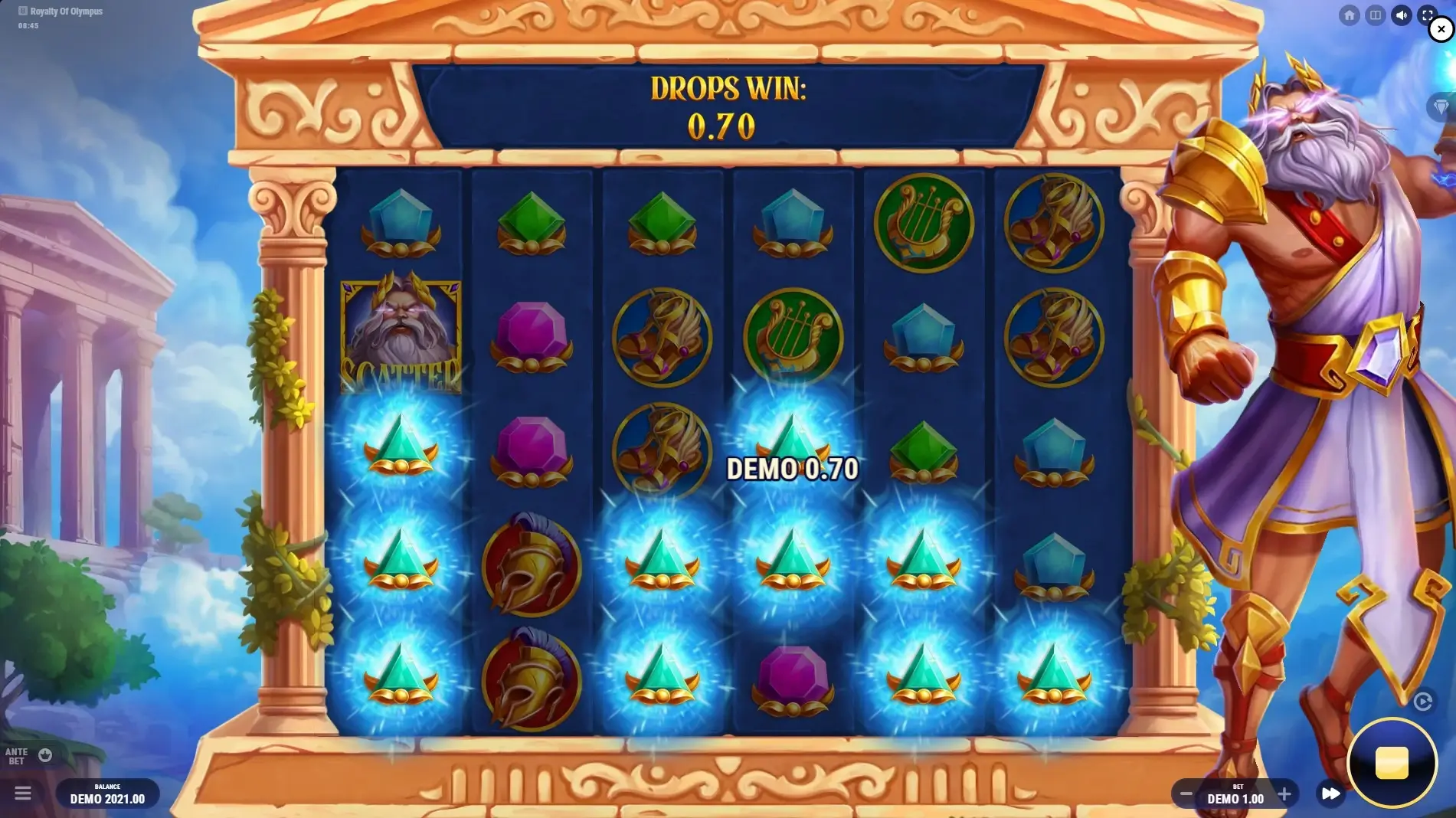
The paytable splits into high-value thematic symbols and low-value gemstones. On the premium end, you’ve got the Hoplite Helmet, Gold Goblet, Hermes’ Sandals, and Harp. These pay between 1.5x and 50x your stake depending on how many land. For 12+ matching premium symbols, you’re looking at that 50x max payout, which sounds impressive until you realize how rarely you’ll actually see that many identical premiums cluster together.
The gemstone symbols – your standard colorful card suit replacements – pay considerably less. We’re talking 0.2x to 10x your stake, with the 10x requiring 12+ symbols. During my testing, the bulk of my wins came from these lower-value symbols, usually paying between 1x and 3x per cascade. Not exciting, but it keeps things moving.
Zeus himself appears as the Scatter symbol, and he’s the only one that pays regardless of quantity rules. Landing 4, 5, or 6+ Zeus scatters anywhere gives you 3x, 5x, or 100x your stake respectively, plus triggers the Free Spins feature. That 100x for six scatters is genuinely nice when it hits – I managed it once across all my sessions, turning a €3 bet into €300 before the free spins even started.
Here’s something that initially annoyed me: there’s no Wild symbol. None. Gates of Olympus doesn’t have one either, so it’s consistent with the inspiration, but it still feels like a missed opportunity for Barbara Bang to differentiate their game. Wild symbols could have added a layer of strategic depth, but instead, you’re completely dependent on symbol clustering and cascade luck.
The Cascading Reels Mechanism
Every time you hit a winning combination, those symbols explode off the reels and new ones cascade down from above. Standard stuff if you’ve played modern slots, but the implementation here is smooth. I tracked cascade chains during one particularly hot session and recorded a maximum of seven consecutive cascades from a single spin. That sequence started with a modest 12x win and built up to 89x total by the time it finished, thanks to multipliers accumulating along the way.
The cascades create this natural tension because each new drop could either fizzle out or trigger another win, potentially with bigger multipliers. I found myself holding my breath during those third and fourth cascades, watching for Zeus multiplier symbols to land and boost the sequence further.
What frustrated me, though, was the frequency of one-and-done cascades. Too often I’d hit an initial win, get excited for a sequence, and watch new symbols drop in with absolutely no matching clusters. The game would tease potential then immediately shut it down. Over my 800+ spins, I’d estimate about 60% of cascades ended after just one iteration, 30% made it to two or three, and only 10% really got cooking with four or more consecutive drops.
Divine Multipliers: The Main Event
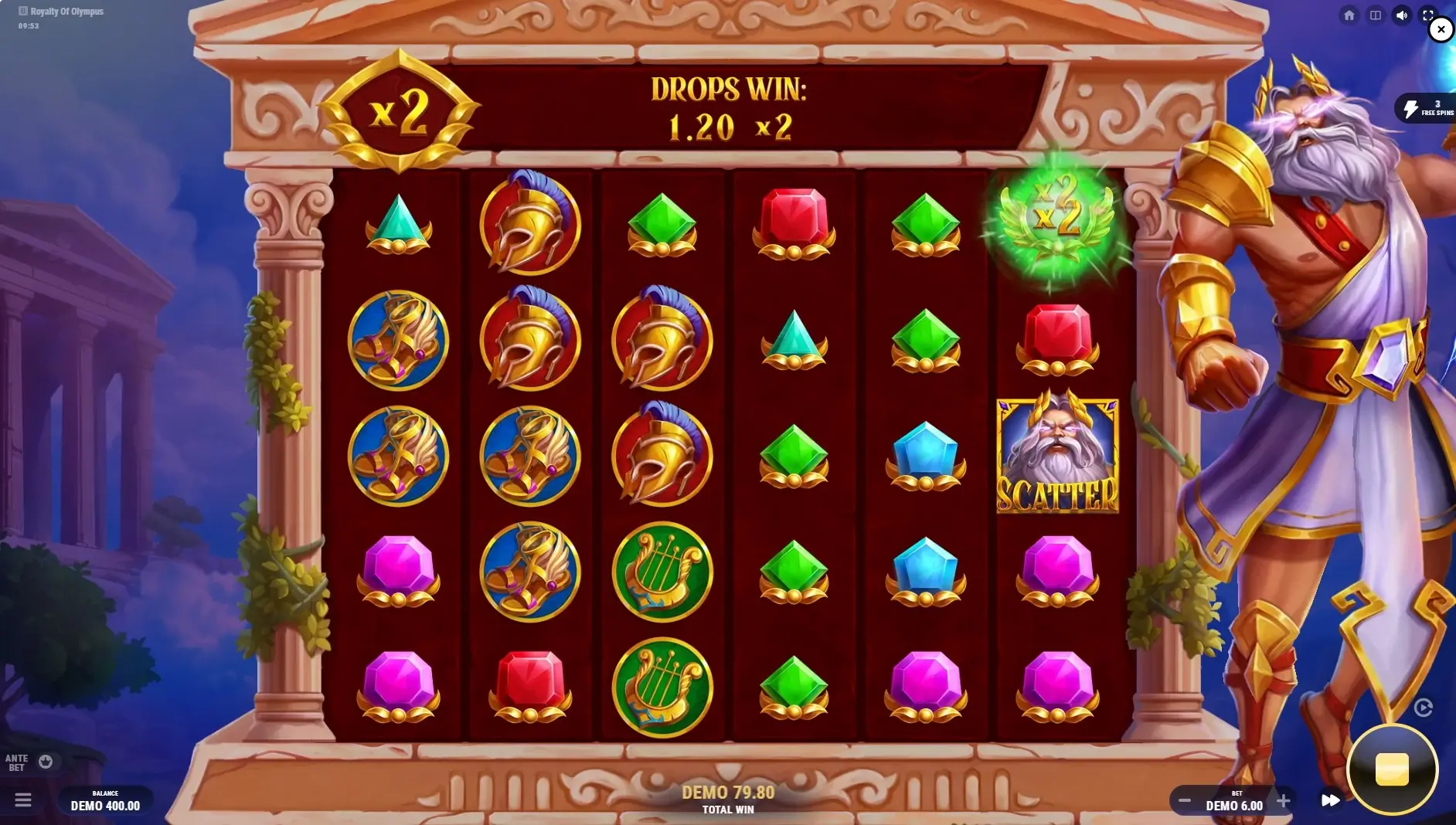
This is where Royalty of Olympus tries to establish its identity. Zeus can randomly appear as a multiplier symbol during any spin or cascade, carrying values of x2, x5, x10, x25, x50, x100, x250, x500, or x1000. When a multiplier lands during a winning sequence, it applies to all wins in that spin’s cascade chain.
The distribution feels weighted toward lower values. I saw x2 and x5 multipliers constantly – probably every 15-20 spins on average. The x10 and x25 range showed up maybe every 50-60 spins. Anything x50 or above became genuinely rare. I recorded x100 multipliers appearing four times across my entire testing period. Never saw a x250, x500, or x1000 multiplier in base game play, though I know they exist because I hit a x250 during one free spins session.
When multiple multiplier symbols land in the same cascade sequence, they add together. Land a x5 and x10 in the same set of drops, and you’re working with x15 total. This can create explosive moments, but it’s wildly inconsistent. Most of the time, you’re getting either no multiplier or a single small one that turns a 3x win into a 9x win – helpful but not life-changing.
The biggest multiplier hit I experienced in base play was x50 during a decent cascade chain, turning what would have been a 28x sequence into a 1,400x monster win on a €2 bet. That €2,800 payout in a single spin was genuinely thrilling, but it also represented my best result from hundreds of spins. Setting expectations based on that one hit would be misleading.
Free Spins Feature – Where Things Get Interesting
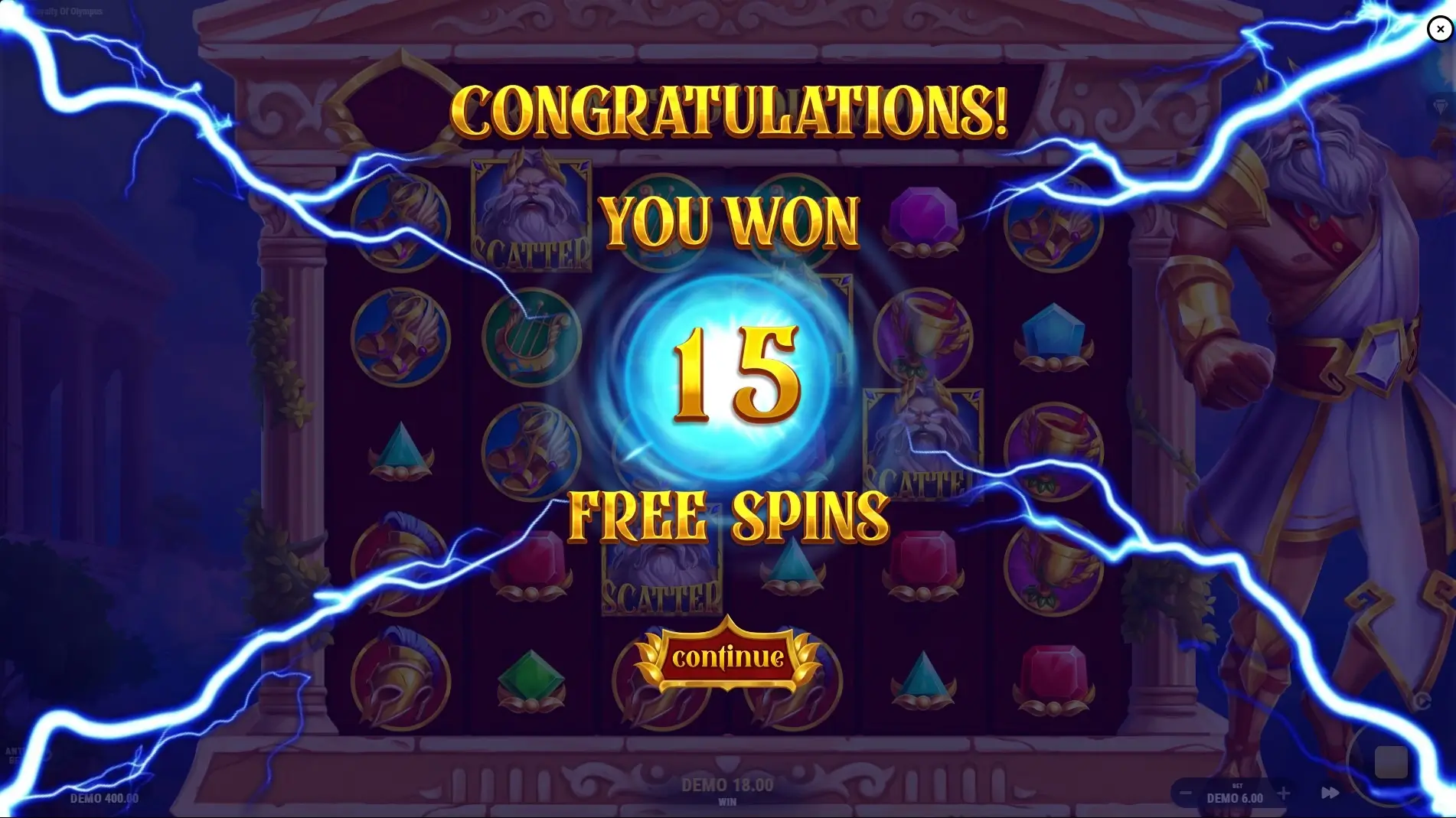
Landing four or more Zeus scatters triggers 15 Free Spins with a Global Multiplier that starts at x1 and increases every time a multiplier symbol lands. This is different from the base game – instead of multipliers applying only to the current cascade, they permanently increase the Global Multiplier for all remaining spins.
I triggered Free Spins seven times during my testing through natural play, hitting it roughly every 115 spins. That frequency felt about right for a high-volatility feature. The variance in results was staggering, though. My worst Free Spins round delivered a measly 18x total return – basically, I got my trigger back and nothing more. The spins played out with minimal cascades, low multipliers, and garbage symbol distribution.
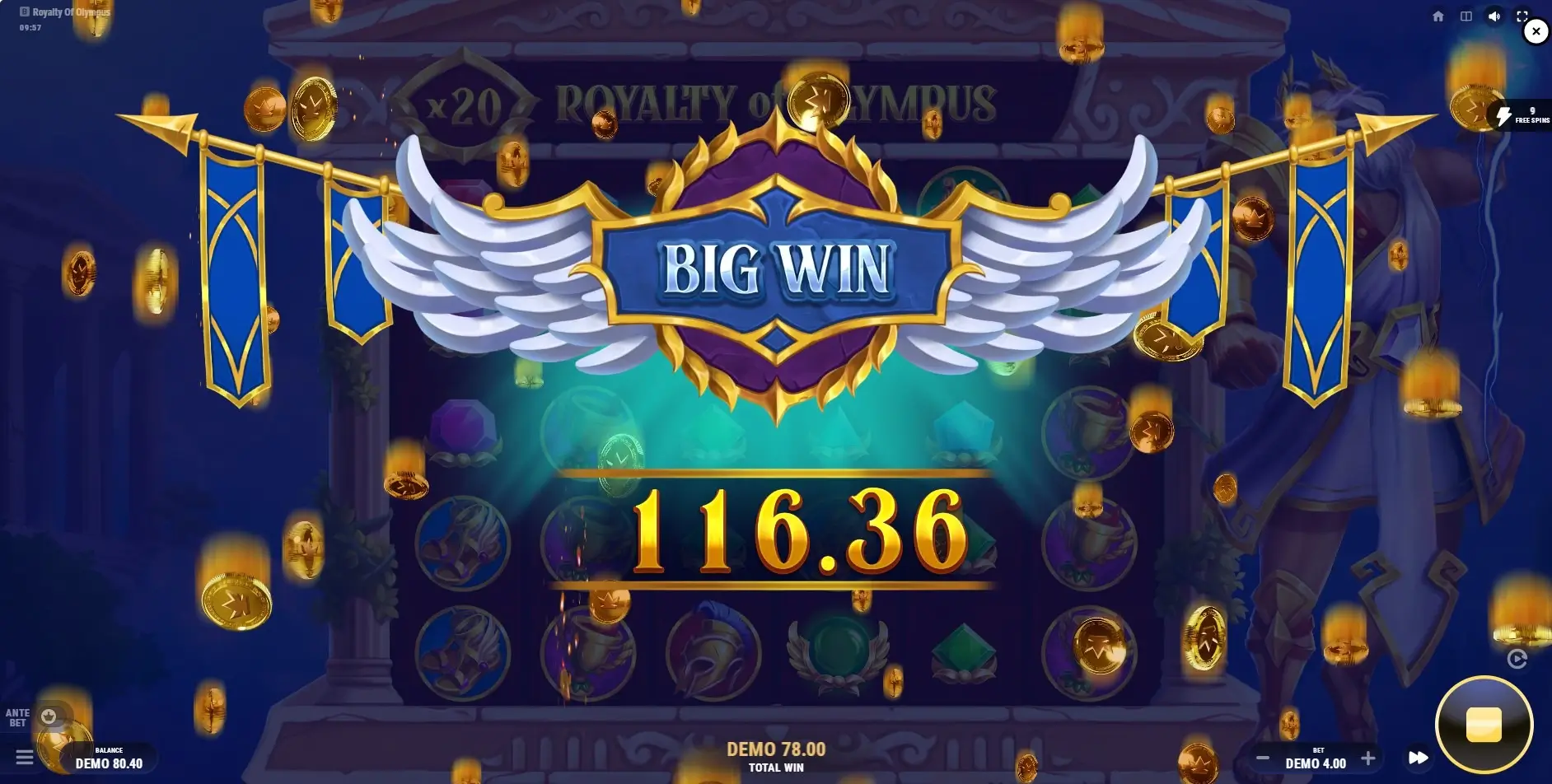
My best natural trigger, by contrast, built the Global Multiplier up to x47 by the final spin and delivered a combined 890x payout on a €3 bet. The difference came down to early multiplier hits creating momentum. When you land a x25 or x50 multiplier in the first few free spins, suddenly every subsequent win gets amplified significantly. But when the first 8-10 spins pass with only x2 and x5 multipliers, the feature feels anemic.
Landing five scatters (instead of four) gives you Enhanced Free Spins starting at x5 Global Multiplier. Six scatters bump that to x10. I only managed five scatters once, and honestly, that x5 head start made a noticeable difference. The feature reached x73 Global Multiplier and paid 1,247x – not quite jackpot territory, but genuinely satisfying.
You can retrigger Free Spins by landing four more scatters during the feature, which awards an additional 15 spins while maintaining your current Global Multiplier. This happened to me exactly once, and watching the multiplier climb from x32 up to x89 across 30 total spins was probably the highlight of my entire testing period. That session alone recovered most of my testing losses.
Ante Bet and Bonus Buy Options
The Ante Bet toggle increases your stake by 1.5x but triples your chances of triggering Free Spins. Mathematically, you’re paying 50% more per spin for a 3x increase in scatter frequency. I ran 200 spins with Ante Bet active and tracked the results. I triggered Free Spins three times in those 200 spins versus two times in a comparable 200-spin session without Ante Bet. The sample size is too small for statistical significance, but subjectively, it felt like the feature came around more often.
Whether Ante Bet is worth it depends on your bankroll and patience level. If you’ve got the budget to handle 1.5x stakes and you’re primarily interested in reaching Free Spins rather than grinding base game, it’s a reasonable option. But it’s not magic – you’re still playing a high-volatility slot, just with slightly better odds of hitting the main feature.
The Bonus Buy costs 100x your bet and immediately triggers Free Spins with four scatters. I bought the feature five times during testing at various stake levels, and results ranged from disappointing to solid. Best return was 268x on a €2 buy-in (costing €200, paying back €536 for a €336 profit). Worst was 47x, which means I paid €500 to get back €235 – a painful €265 loss in about three minutes.
Bonus Buy is pure gambling, even by slot standards. You’re making a significant upfront investment hoping the feature cooperates. If you hit good multipliers early, you can score big. If the feature plays out weak, you’ve just burned through a huge chunk of bankroll instantly. I don’t recommend bonus buying unless you’re specifically testing the feature or you’ve built up enough winnings that you can afford to gamble with house money.
Mobile Performance Observations
I tested Royalty of Olympus on three different Android devices: a Samsung Galaxy A52, a Xiaomi Redmi Note 10, and a OnePlus Nord 2. Performance was consistently smooth across all three, which surprised me given the animated multiplier effects and cascade sequences.
The Galaxy A52 (mid-range device with 6GB RAM) handled everything perfectly. Animations remained fluid even during complex cascade chains with multiple multipliers firing. Battery drain was reasonable – about 15% per hour of continuous play, which is typical for modern slots with this level of graphics detail.
The Redmi Note 10 (budget-friendly option with 4GB RAM) showed very minor frame rate drops during the most graphically intense moments, but nothing that impacted gameplay. Battery consumption was slightly higher at maybe 18-20% per hour. Still perfectly playable for extended sessions.
The OnePlus Nord 2 (higher-end device) absolutely crushed it – zero performance issues, buttery smooth animations, and excellent battery efficiency at about 12% per hour.
Screen layout in portrait mode worked well for one-handed play during commutes. All buttons remained easily accessible, and the 6×5 grid scaled appropriately without symbols becoming too small to distinguish. Landscape mode offered a more immersive experience with larger symbols, but required two-handed control and felt less practical for mobile sessions.
Data usage clocked in around 8-12 MB per hour on a stable 4G connection, which is negligible. The game loaded quickly on all devices (under 5 seconds from app launch to ready-to-spin), and I experienced only one disconnection across dozens of mobile sessions. When reconnected, my balance and game state were preserved correctly.
The Gates of Olympus Elephant in the Room
Let’s address this directly: Royalty of Olympus borrows heavily from Pragmatic Play’s Gates of Olympus. The 6×5 grid, Pay Anywhere mechanics, cascade feature, multiplier symbols, Greek mythology theme, and Zeus-centric design are all lifted straight from the playbook. Even the visual style – ethereal clouds, marble columns, divine color palette – echoes Gates of Olympus closely enough that players will immediately notice the similarities.
Barbara Bang isn’t hiding this. They’ve identified a successful formula and implemented their version of it. The question becomes: does their version offer anything meaningfully different?
The honest answer is: not really. The multiplier values cap at x1000 in both games. The Free Spins feature functions nearly identically with accumulating multipliers. The symbol payouts follow similar patterns. The volatility profiles match. Even the maximum win potential is the same at 15,000x.
Where Royalty of Olympus differs is in small details rather than fundamental mechanics. The symbol artwork is distinct (though still Greek-themed). The soundtrack has a slightly different orchestral arrangement. The Free Spins animation sequences play out with unique visual flourishes. But these are cosmetic differences, not gameplay innovations.
The RTP comparison favors Gates of Olympus at 96.5% versus 96%. That’s not devastating, but it means over extended play, Gates of Olympus theoretically returns slightly more to players. Combined with Gates of Olympus having years of track record, widespread availability, and proven reliability, it’s hard to make a compelling argument for choosing Royalty of Olympus based on gameplay alone.
That said, Barbara Bang’s version isn’t strictly worse – it’s just very similar. If you’ve played Gates of Olympus into the ground and want something that feels fresh while maintaining familiar mechanics, Royalty of Olympus might scratch that itch. If you’re new to this style of slot, honestly, you should probably just play the original unless Royalty of Olympus happens to be available at a casino offering better promotions or bonuses.
Strategy and Bankroll Considerations
High volatility demands disciplined bankroll management. I’d recommend starting with at least 200x your base bet available. So if you’re spinning at €1, have €200 set aside specifically for this session. That gives you enough runway to survive dry spells without busting out before the slot delivers a significant hit.
Start with minimum bet sizing until you get a feel for the game’s rhythm. Once you’ve hit a solid win (50x or more), consider increasing stakes slightly to capitalize on potential momentum. But never chase losses by dramatically increasing bets – that’s how you blow through your bankroll in minutes against high-volatility games.
The Ante Bet is worth considering if your bankroll can handle 1.5x stakes comfortably. Running through 150-200 spins with Ante Bet active gives you reasonable odds of hitting Free Spins at least once, which is really what you’re playing for anyway. Just make sure you’re not stretching your budget to activate it.
Bonus Buy should only be used when you’ve already made profit and want to gamble with winnings. Buying the feature cold as an opening strategy is financially reckless unless you’re specifically testing it or you have serious money to burn. Even then, understand that you can easily buy multiple duds in a row.
Set clear stop-loss limits before you start. Decide that if you lose 50% of your session bankroll, you walk away. Similarly, set a win goal – maybe if you double your starting amount, you cash out and take the profit. These limits prevent the common mistake of winning big then giving it all back chasing even bigger wins.
Pros and Cons From Actual Play Experience
What Works:
The multiplier system, while borrowed from Gates of Olympus, genuinely creates exciting moments. Watching that x50 or x100 symbol land during a good cascade triggers authentic excitement.
Mobile optimization is solid. Barbara Bang clearly tested this across devices, and it shows in the smooth performance and intelligent UI scaling.
Free Spins can deliver massive payouts when multipliers accumulate favorably. That building Global Multiplier creates natural drama as spins progress.
The cascade mechanic provides more engagement than static spins. Each win becomes a mini-sequence with potential to snowball.
Visual presentation is polished. The game looks good without being overly flashy or distracting. Zeus animations are satisfying without slowing down gameplay.
Betting range accommodates both casual players and high rollers effectively. The €0.10 minimum makes the game accessible; the €500 maximum gives whales room to play.
What Doesn’t Work:
The RTP at 96% lags behind direct competitors, which matters over the long term.
Originality is essentially zero. This is a Gates of Olympus clone with minimal innovation or unique features to distinguish it.
Base game can feel brutally stingy. Long stretches between significant wins test patience and deplete bankrolls.
No Wild symbols means you’re entirely dependent on symbol clustering and multiplier luck. There’s no additional mechanic to help create wins.
Free Spins variance is extreme. You can trigger the feature and walk away with essentially nothing if multipliers don’t cooperate early.
The lack of any meaningful differentiating feature makes it hard to recommend over established alternatives.
One-and-done cascades happen too frequently, creating anticipation that immediately deflates.
The x1000 multipliers are so rare in practice that they might as well not exist for most players. Marketing them as a key feature feels somewhat misleading.
Final Verdict and Recommendations
After three weeks of testing, I can appreciate what Barbara Bang has created here without being particularly enthusiastic about it. Royalty of Olympus is a competent, well-executed slot that offers solid entertainment value. The problem is that it’s competing directly with Gates of Olympus while bringing virtually nothing new to the table and operating with a slightly lower RTP.
If I’m being brutally honest, I can’t think of a compelling reason to choose this over Gates of Olympus unless you specifically want variety after playing the original extensively. The gameplay experience is nearly identical, just with different artwork and a fractionally worse return rate.
That said, Royalty of Olympus isn’t a bad slot. It functions properly, delivers the high-volatility thrills it promises, and can absolutely produce significant wins when conditions align. My 1,247x Free Spins hit was genuinely exciting. The mobile experience is smooth and well-optimized. The game does what it sets out to do.
I’d rate it a 6.5/10. Solidly average, professionally executed, but lacking the innovation or unique appeal that would push it higher. It’s perfectly fine if you encounter it at a casino with good bonuses or promotions. But I wouldn’t specifically seek it out or prioritize it over established alternatives.
Who Should Play This:
Players who love Greek mythology themes and want alternatives to Gates of Olympus. High-volatility enthusiasts who enjoy the tension of big multipliers and dramatic swings. Mobile-first players who need slots optimized for smartphone play. Anyone looking for that specific combination of cascade mechanics and accumulating multipliers in a slightly different package.
Who Should Skip This:
Players seeking original mechanics or innovative features. Low-volatility preference players who want steady, regular wins. Anyone with limited bankrolls who can’t handle extended dry spells. Players who already enjoy Gates of Olympus and don’t need a near-identical alternative.
The reality is that Royalty of Olympus exists in the shadow of the game it’s clearly inspired by. Barbara Bang has executed their version competently, but they haven’t given players a compelling reason to switch. It’s the slot equivalent of a cover band – they play the song well enough, but you’d probably rather hear the original. Still, if the cover band is playing at a venue with better drink prices, you might stick around and enjoy the show anyway.