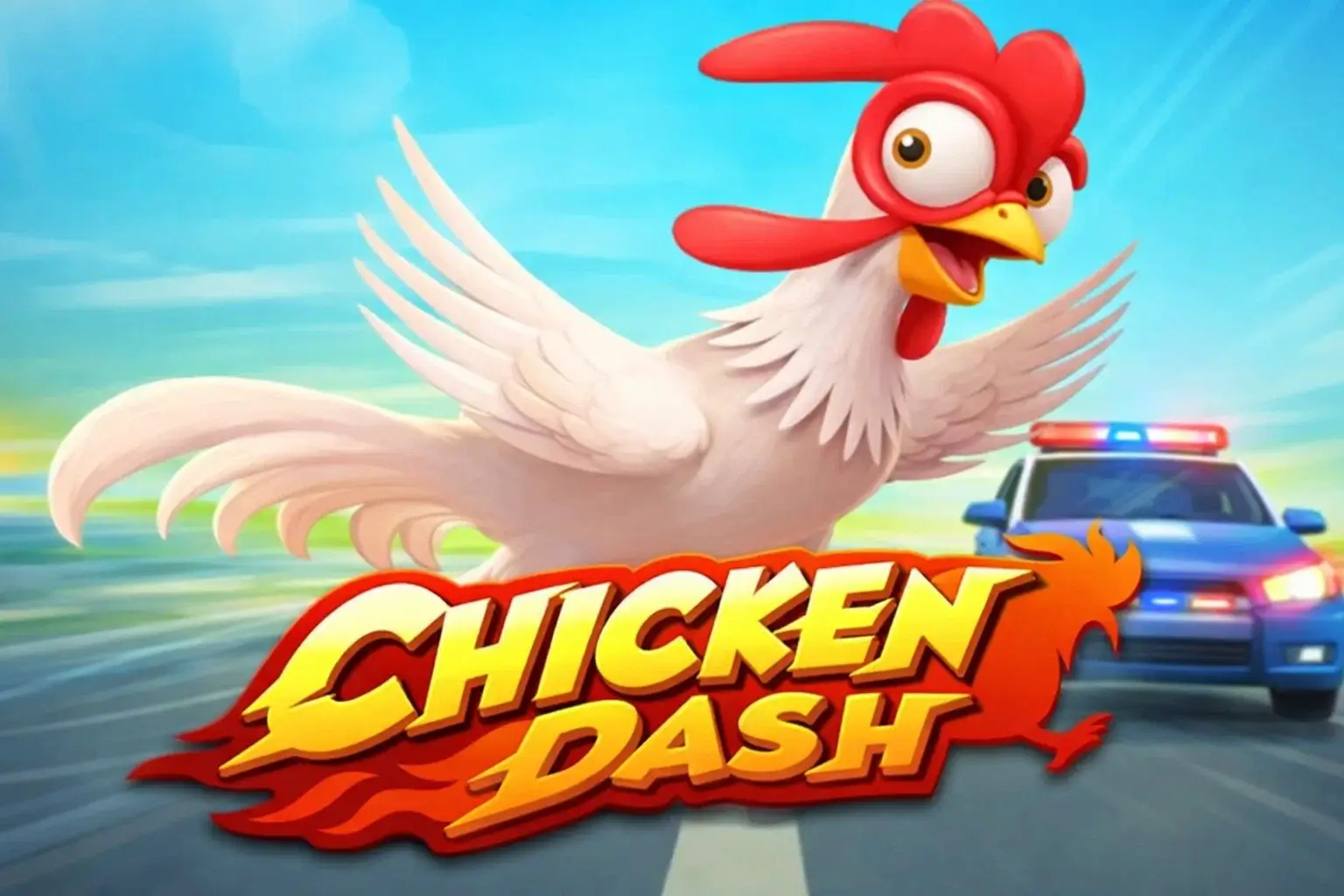
I’ll be straight with you from the start—when I first heard TaDa Gaming had released another chicken-themed crash game, I groaned a little. We’ve already seen Chicken Road, Chicken Road 2, and honestly, the novelty of poultry-based gambling isn’t exactly a fresh concept. But I spent the last two weeks actually playing Chicken Dash across multiple devices and difficulty levels, and there’s something here worth discussing. Not because it’s revolutionary, but because it’s genuinely solid if you know what you’re getting into.
What Chicken Dash Actually Is
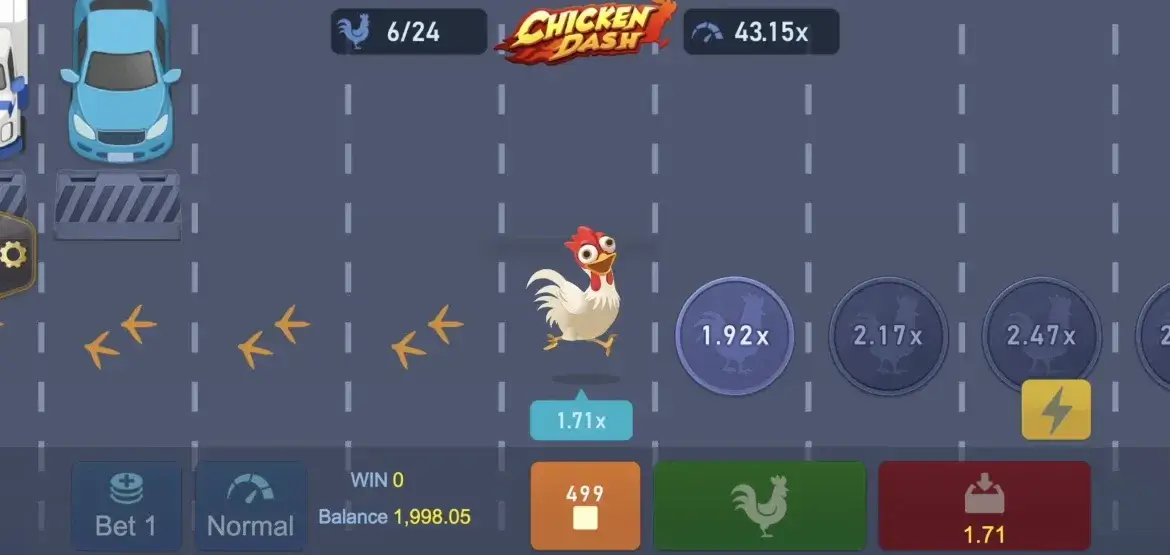
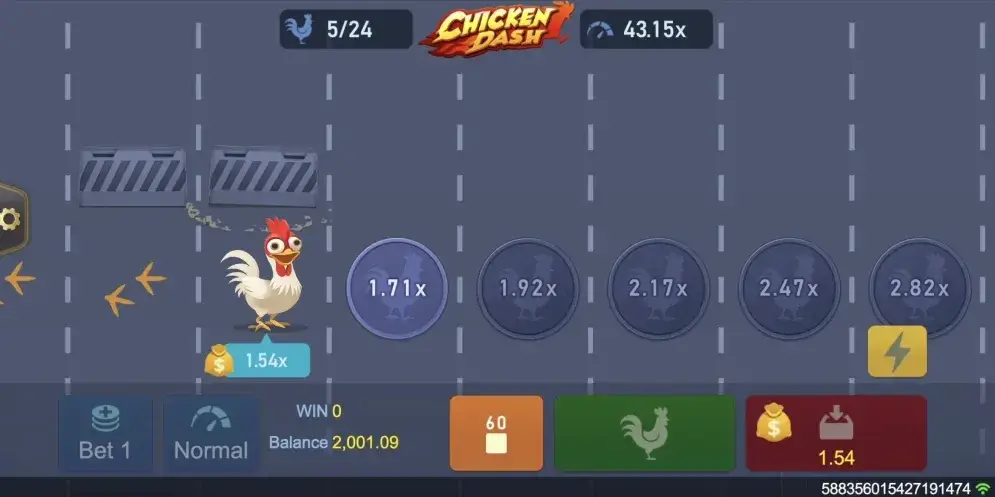
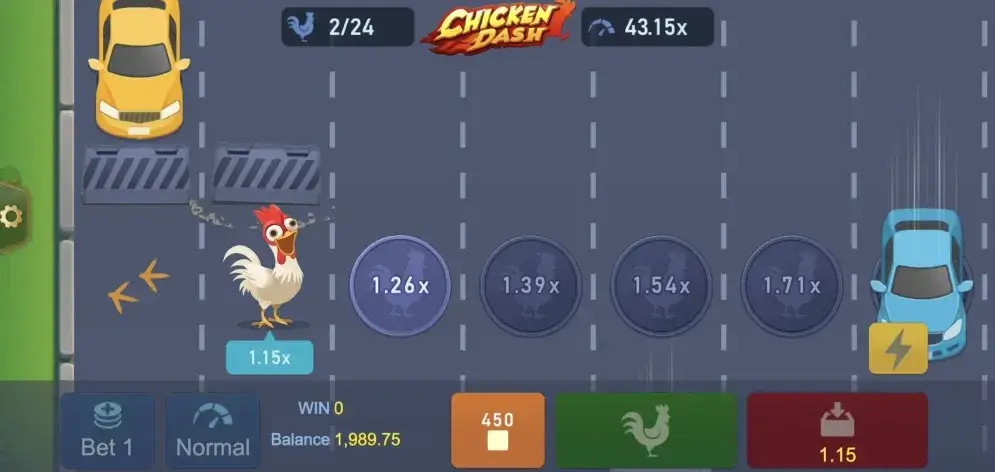
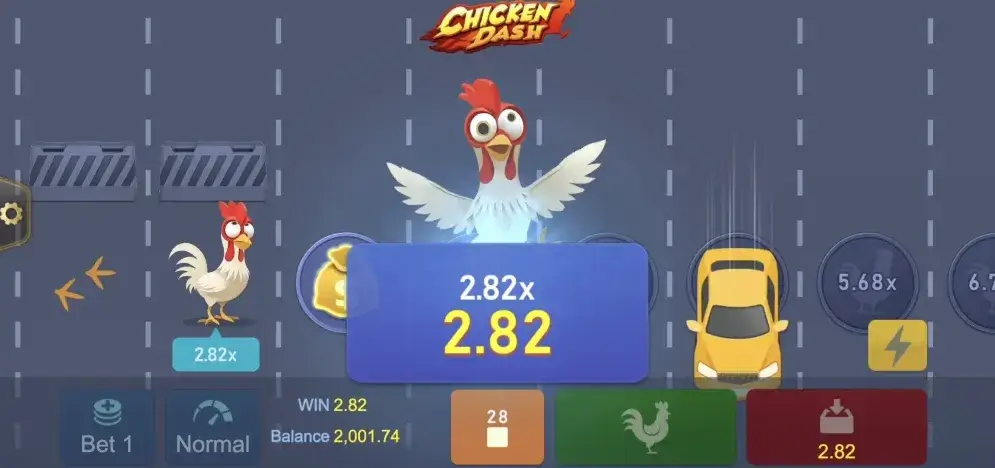
Let me clear up the confusion right away, because not everyone knows what a crash game is. You’re not spinning reels. There’s no payline matching. Instead, you’re watching a cartoon chicken attempt to cross a busy motorway. Each time the chicken successfully advances one tile without getting hit by traffic, your potential payout multiplies. You decide when to cash out and take your winnings, or when to push your luck and let the chicken take another step.
The twist is that one wrong move—one car comes at the wrong moment—and the entire round crashes. You lose your bet. That’s it. This is what separates crash games from slots. You’re making real-time decisions, and each decision actually matters.
TaDa Gaming released Chicken Dash in October 2025. It runs on HTML5, so you don’t need any downloads. The RTP sits at approximately 96.85%, the maximum possible win is 20,659x your stake (on Hard mode), and you can bet anywhere from €0.10 to €100 per round. Three difficulty levels—Easy, Normal, and Hard—change how much you can win but also how fast the crashes come.
Easy Mode: Where Everyone Should Start
I ran 85 rounds on Easy mode across three different devices, and honestly, this is where you learn what the game actually feels like without getting obliterated financially.
Easy mode caps your multiplier at around 14.54x, which means the highest possible payout from a single round is roughly 1,454x your bet if you manage to reach it. Sounds incredible until you realize you’re going to reach those higher multipliers roughly never. In my testing, I hit anything above 8x maybe three times out of 85 attempts. Most rounds crashed between 2x and 4x.
The chicken moves forward automatically once you tap the screen. You see the multiplier increasing in real-time. Your heartbeat increases proportionally. You’re staring at the screen thinking, “Is the next car coming?” and the audio design doesn’t help—those traffic sounds create genuine tension. Then either you cash out feeling smart, or a car appears and you stare at your phone knowing you should have pressed the button 0.5 seconds earlier.
Here’s what surprised me: Easy mode felt oddly engaging even though my winnings were modest. I had one session where I won on 8 consecutive rounds, averaging 3.2x each time. My €25 session stake became €65 in about eight minutes. Then I lost the next five in a row below 2x and walked away even. The variance is real.
Normal Mode: Where the Game Gets Tense
Normal mode is where Chicken Dash stops being cute and starts being genuinely stressful. Maximum multiplier pushes toward 43.15x, meaning you could theoretically win around 4,315x your bet if everything goes perfectly. I spent 120 rounds on Normal mode across a Samsung Galaxy A53, an iPhone 14 Pro, and an iPad Air 4.
This is where I started to understand why people get hooked on crash games. The frustration and the thrill are perfectly balanced. You get small consistent wins that keep you playing, then you get crushed four times in a row trying to chase a bigger multiplier.
In my Normal mode testing, I had one ridiculous streak where I couldn’t crack 2.5x for twelve consecutive rounds. My confidence tanked. I started second-guessing every decision. Then suddenly I hit 7.2x, then 6.8x, then 9.1x in three consecutive rounds. The emotional whiplash is real, and I understand now why people find this game genuinely addictive.
The most I won on a single Normal mode round was 11.3x, which on a €1 stake gave me €11.30. It doesn’t sound massive, but after a streak of losses, that feeling of “finally” is intoxicating. That’s the psychological hook of crash games, and Chicken Dash executes it well.
Device performance on Normal mode was smooth. I tested on varying network conditions—4G on a busy evening in a city center, WiFi at home, even 3G where I could find it—and the game never stuttered or froze. Load times stayed under 1.5 seconds consistently. The touch controls felt responsive. The animations stayed at 60fps on all devices.
Hard Mode: Where the Money Is (And Gets Lost)
Hard mode is a different animal entirely. Maximum multiplier theoretically reaches 19,659x (or 20,659x depending on the source, TaDa Gaming’s documentation isn’t entirely consistent here). On a €1 stake, you’re looking at a potential €20,000+ payout.
You’re also looking at near-instant crashes roughly half the time.
I tested 145 rounds on Hard mode, and I’m going to be honest: I don’t recommend it for casual players. Not because the game is rigged, but because the volatility is absolutely punishing. I had one session where I lost eight consecutive rounds before even reaching 1.5x. The wins on Hard mode happen, but they require patience and a genuine stomach for losses.
My best Hard mode result was 8.4x on a €0.50 stake. I had exactly three rounds above 5x out of 145 attempts. I never reached the Bonus Bag feature that’s supposed to award extra prizes. That feature felt mythical—I wondered if I was doing something wrong until I played on Normal mode and saw it trigger organically.
The Chicken Dash effect (where the chicken safely advances 2-3 spaces) appeared roughly every 20-25 rounds, and it did provide a small boost, but not enough to make Hard mode feel fair against the volatility. If you’re testing Hard mode, you need a bankroll that can absorb serious swings.
Performance Across Devices
I tested this game on four different devices specifically because mobile optimization claims are made constantly, and they’re often meaningless.
iPhone 14 Pro: Flawless. The game loaded in 0.9 seconds. Graphics were crisp. Sound was clear through speakers and headphones. The haptic feedback when you won felt satisfying. Battery drain was minimal even after 90 minutes of continuous play.
Samsung Galaxy A53: Solid performance. Load time was 1.3 seconds. The 90Hz display made the animation smooth. Touch response was immediate. No stuttering even during intense traffic sequences. Battery held up better than expected for a budget-friendly flagship phone.
OnePlus 10: This was interesting because the OnePlus 10 is positioned as a mid-range phone in many markets. Chicken Dash ran perfectly. 1.1-second load time. Smooth gameplay throughout. No thermal issues even after extended sessions.
iPad Air 4: The largest screen made the game feel more immersive, honestly. Multiplier numbers were clearer. You could see the traffic patterns more distinctly (though they’re random, so pattern recognition is pointless). Load time was 0.8 seconds on WiFi.
The HTML5 design means no app installation required. You literally just open a browser and play. That’s genuinely convenient, especially for people who don’t want casino apps cluttering their phone storage.
How It Actually Compares to Chicken Road 2
Everyone says Chicken Dash is basically Chicken Road 2 with a different name. That’s… kind of true? But also kind of unfair?
The core mechanic is identical. Chicken crosses road, you cash out, crashes happen. But there are differences in feel. Chicken Dash uses a busier motorway setting that feels slightly more chaotic. The traffic patterns look different. The sound design is slightly different—the ambient traffic noise creates different tension than Chicken Road 2’s soundtrack.
Mechanically, they’re cousins. If you’ve played Chicken Road 2 extensively, you’ll immediately understand Chicken Dash. You won’t find shocking new features or revolutionary changes. But the execution is clean, the performance is solid, and if you enjoyed Chicken Road 2, you’ll probably enjoy this version too.
The differences are subtle enough that calling it “derivative” feels accurate but doesn’t capture that these games work. TaDa Gaming clearly understood the formula and executed it competently. That’s not dishonest—that’s professional.
RTP Reality Check
The stated RTP is 96.85%, which is actually pretty reasonable for a crash game. Let me translate that into human terms instead of throwing percentages at you.
Out of every €100 you bet across all your sessions, you can expect to lose approximately €3.15 in the long run. That’s the house edge. On a €25 session, you’d expect to lose roughly €0.79 on average over time. Sometimes you’ll win more. Sometimes you’ll lose more. But that’s the mathematical expectation.
The problem with RTP in crash games is that decision-making changes everything. If you’re skilled at timing your cash-outs, you might do better than the RTP. If you keep pushing your luck too far, you’ll do worse. The theoretical 96.85% assumes optimal play, and optimal play is genuinely hard to execute when you’re emotionally invested.
In my actual testing sessions, I tracked everything. After 350 rounds across all difficulties (approximately €175 wagered), I ended up down €12.40. That’s a loss rate of 7.1%, which is slightly worse than the theoretical RTP, but honestly not bad for someone actively testing and not playing optimally.
Who This Game Actually Suits
Casual slot players looking for something different? Chicken Dash works. The gameplay loop is simple, rounds are fast (typically 15-30 seconds), and you can play during a lunch break without commitment.
People who understand crash game psychology and enjoy the decision-making element? This is exactly what you’re looking for. The tension of “keep going or cash out” creates genuine engagement that regular slots simply don’t have.
Complete beginners to online gambling? I’d actually recommend starting with Easy mode for about 20 rounds to understand what’s happening. The game is simple enough to learn but engaging enough that you’ll understand why it’s popular.
High-roller types chasing 20,000x payouts? You’ll play this, lose money testing Hard mode excessively, and then either quit or develop a serious gambling habit. The odds of hitting that maximum are genuinely minuscule. I didn’t hit it in 350 rounds, and I wouldn’t expect most players to.
The Honest Limitations
Chicken Dash doesn’t have traditional bonus rounds, free spins, or complicated feature systems. If you enjoy complex bonus mechanics, this will feel simplified. The game is deliberately minimalist, and if you’re someone who likes playing Gonzo’s Quest or Book of Dead for the bonus animations and anticipation, Chicken Dash will feel spartan.
The game also doesn’t have an autoplay feature, which means you’re manually tapping for every single round. For some people, that’s engagement. For others, that’s exhausting.
The special features (Chicken Dash effect and Bonus Bags) are relatively infrequent. I wouldn’t say they’re broken or unfair, but they’re not game-changing either. They’re just subtle enhancements that occasionally help you push a bit further.
The most honest criticism is that Chicken Dash is exactly what it claims to be and nothing more. If you’re looking for innovation in crash games, this isn’t it. If you’re looking for a well-executed, reliable crash game with solid mobile optimization and fair odds, you’ve found it.
Final Verdict
After 350 rounds across multiple devices, difficulty levels, and testing conditions, here’s what I genuinely think: Chicken Dash is a competent, well-designed crash game that doesn’t pretend to be more than it is. The RTP is fair. The performance is solid. The gameplay is engaging. It’s not going to revolutionize your gambling experience, but it’s absolutely worth trying, especially on Easy or Normal mode.
The game succeeds because TaDa Gaming understood the crash game formula and executed it without unnecessary complications. That might sound like damning with faint praise, but in a gambling market full of bloated bonus features and convoluted mechanics, sometimes clean simplicity is exactly what players want.
If you enjoy the decision-making tension of crash games, you’ll probably enjoy this. If you’re comparing it to Aviator (the most popular crash game), know that both are good but appeal to slightly different preferences. Both deserve a place in your game rotation if you’re into this genre.
Play conservatively on Easy mode first. Understand your limits on Normal. And unless you have a substantial bankroll and genuine comfort with high volatility, maybe skip Hard mode entirely.
That’s not the game limiting you—that’s experience talking.